Review of Christopher L. Eger’s “Last Stand on Zombie Island”
Last Stand On Zombie Island briefly provides the reader with an understanding of the virus that causes the zombie apocalypse when it touches down in Los Angeles and rapidly spreads from there, in the first chapter, though this is just a very brief introduction to the inevitable tale any fan of apocalyptic fiction knows extremely well. The author shifts gears in chapter two and from there on out we are focused on Gulf Shores, Alabama, where we are introduced to Billy, a fishing boat captain, as well as the rest of the residents of this popular tourist destination.
The island setting is thrust into the zombie apocalypse with the arrival of the virus through several different sources, including several children who were infected elsewhere and have returned to their schools on the island. In the meantime, there is rumor that the world is either at war or on the brink of it, with nuclear weapons supposedly being launched across the globe while infection rages everywhere. Things break down rapidly on the island too, with Billy desperately scrambling to find his teenage daughter and younger son at their schools while the small army presence and police force try to hold things together, though they face a daunting, uphill battle against a growing number of the infected revealing themselves on the island as well as those looking to charge cross the one still standing bridge from the mainland. At the same time, the reader is also introduced to the crew of the Coast Guard Cutter Fishhawk, which joins in the effort to save the island as the world around it crumbles.
Last Stand On Zombie Island does not bring anything new to the table with the undead, which is, as I have said in my past reviews, fine by me. These are traditional Romero zombies for the most part, though it is of note that in addition to their lust for flesh, there are hints at other basic lusts on their part as well, though this is only minimally detailed here and isn’t a factor in the story. We are treated to an ensemble cast, with Billy loosely playing the role of the main character, though the spotlight is shared by several others as well, predominantly military personnel. They are leaders from the army, coast guard, and air force who have come together in their efforts to keep the undead across the bridge and to find other survivor outposts in the surrounding communities and elsewhere. The characters are well detailed and it was easy for me to accept them as genuine. And while there is plenty of action and zombie gore, the characters and their stories are the primary focus here.
What sets this story apart from most other zombie apocalypse sagas is the depth of technical detail with which the author provides us with in regards to the military and virtually every other aspect of survival and experimentation done by the island dwellers in their efforts to not only to stay alive but to thrive under duress. Most importantly, the author did this without bogging the reader down in the minutia that some writers seem quite fond of when they describe weapons, tactics, and combat scenarios in particular. The author never resorts to providing us with laundry list of weapons or regales us with microscopic details that distract from the human element of the saga.
Overall, this book is a solid entry into the zombie subgenre, in particular because of its depth of detail that enhanced, rather than distracted from main story. Things do drag in the middle section of the book, when the initial shock and awe of the zombie onslaught has passed and everyone is doing their best to make due on an island cut off from the mainland while small expeditions are mounted to see if there are other survivors elsewhere. The tale is looser and slower moving at this point, building toward the inevitable storm that is coming, and allows for more character development. It also reveals what is perhaps my only area of significant criticism with this tale, and that is that there is little in the way of human antagonists to be found on its pages. There are a couple of shady characters, but they play a minor role at best in the overall story and add little in the way of conflict into the plot. I guess I’ll admit that I’m a sucker for human weakness and frailties causing even more mayhem than a zombie could possibly dream of creating.
While I would have liked to have seen the pot stirred up a bit with more human machinations, this is a very solid entry into the zombie subgenre that gives us a realistic scenario and tactics that might be used under such dire circumstances. It seems clear from how things end and the fact that there were a few loose ends not tied up by the story’s completion that a sequel is likely in the works, though this book most assuredly can stand on its own. Well thought out with solid action and believable characters, Last Stand on Zombie Island is definitely worth checking out.
Last Stand on Zombie Island can be found here: http://www.amazon.com/Last-Stand-Zombie-Island-Christopher/dp/1475210531/ref=sr_1_1?ie=UTF8&qid=1342973474&sr=8-1&keywords=last+stand+on+zombie+island
Review of August V. Fahren’s “Mad Mannequins From Hell”
Mad Mannequins From Hell tells the story of Burton Vilmos, an former movie special effects makeup artist who makes his living these day murdering people for his website. They pay him to do it, and of course, it isn’t them actually getting killed, it is all just gory fun. But when he runs through one of the scripts he came up with for his son, and takes a book his close friend got from a mysterious shop owner to do a séance-like ritual for the scene, all hell breaks loose. In particular, Beelzebub rises up along with a slew of mannequin-possessing demons that terrorize Portland at Christmas time. Max, Burton’s son, disappears and Burton makes it his mission to find him and put a stop to the mess he’s created. Along the way he finds three unlikely allies in a trio of battle nuns, has to avoid a couple of odd-ball cops (one of which is a midget in a Mexican wrestling mask), and of course, a ton of mad mannequins, who are skewering and draining the essence of everyone they come into contact with.
This is a bizarro tale, with plenty of wild, otherworldly elements and it works quite well as a snarky, humorous horror story with some unlikely heroes and villains instead of the more traditional stereotypical character types. The pace is brisk and it was a breeze to get through, with a lot of twisted and devious forms of mayhem being perpetrated by the demon-possessed mannequins, which had me smiling. A great deal of the story reads like a laundry-list of scenes of mayhem not directly attached to the main character. For a time, after the mannequins rise, we get scene after scene of destruction. Some of them work, some don’t, but my real complaint is that it leaves less room for the battle nuns in the book, who were by far my favorite characters. Perhaps that comes from my Catholic upbringing and schooling. I knew plenty of nuns in my youth and while most of them scared me (and intrigued me), very few had the allure of these three demon-slayers. Their weapons and … assets were quite impressive. I would have liked to see more of them in action, and perhaps there is another story the author might share that reveals their saga in greater detail.
Despite these minor grumps, this was a fun, entertaining read. It brought both smiles and grimaces to my face in equal measure, which is always a good thing.
Mad Mannequins From Hell can be found here: http://www.amazon.com/Mannequins-Uncanny-Valley-Trilogy-ebook/dp/B0089RDMY2/ref=sr_1_1?s=digital-text&ie=UTF8&qid=1342363717&sr=1-1&keywords=mad+mannequins+from+hell
Review of Joseph Souza’s “The Reawakening”
The Reawakening begins with the narrator, Thom Swiftley, a famous novelist, taking his seventeen year old daughter, Dar, up from their Boston home to his brother’s farm in northern Maine. Rick, his brother, was a highly respected geneticist who decided to leave his prestigious career behind to get away from the rat race to grow crops and milk cows, or so it seems. Dar has suffered from numerous mental issues in her life, and has been suicidal throughout much of her teenage years. Thom thinks it would be a good idea for her to see her uncle and favorite aunt before she goes off to college.
Almost immediately things start going wrong on the farm. The cows are acting strange, and so are the birds. Fearing Mad Cow Disease, Rick puts the cows down with his rifle, only to find them back up and trying to kick their way out of their stalls. Rick’s dog has gone mad as well, and so have the pigs. When Rick’s wife gets bitten by one of the cows, she gets a fever, dies, and transforms into some sort of hybrid creature. But before she does that, right after she dies, she speaks of an afterlife and the goal of finding the chosen ones.
More mayhem ensues and when Thom and Dar try to leave the farm, things go even worse for them when she is assaulted at a general store ten minutes from the farm and they have to return. By now, they realize that people are turning into flesh eating monsters (those that are bitten by animals take on some genetic characteristics of the animals that bit them, while those who die in a ‘normal’ fashion become the more traditional slow moving zombies). Rick dives into the mystery of how this happens with scientific zeal as they stay tucked away, safe on the barricaded farm. They are joined by others: one of Rick’s neighbor’s family and a passing biker named Thorn.
The sudden and abrupt changes happening to everything around them transforms Dar dramatically. In particular, the assault she is forced to endure at the general store is the seeming catalyst to a total mutation in personality. It almost seemed as if everyone who has been bitten or dies has reawakened into something different, but even though she hasn’t been bitten, she has been altered as well: into a hate machine. She not only hates the reawakened monsters, but everyone and everything, including her father, who she blames for her life up to this point.
This tale is an intriguing variation on the traditional zombie apocalypse storyline, with the transformed becoming something significantly different than the zombies we have come to know and fear. I am always up for a different approach to the formula, and this one certainly veers in a different direction than you might expect. The mystery here is whether this transformation is genetic, which Rick adheres to or if the transformation is more of a supernatural process, given how the undead initially react before becoming ravenous flesh eaters, as Thom suspects. The brother’s clash on this subject endlessly, as well as on other topics.
Fair warning: this book does not provide the reader with much in the way of characters to identify with or root for. I found it difficult to have much sympathy for anyone but a couple of secondary characters given how everyone seems to transform into loathsome people as things got worse around them. This applies in particular to Dar, whose transformation into a kick-butt undead slayer brought with it a lot of hate, spite, and anger. Essentially, a suicidal teenager unleashes the hatred she had for herself onto the entire world. Not just on those who have been reawakened, but everyone who is still alive. And somehow everyone seems to willingly accept her abuse without question and meekly follow her lead. That her father falls in line with how she acts and Rick, his brother, seems to encourage her ravenous lust for destruction of the undead, are only part of the reasons why I found both of those characters repugnant. Thom is a wimp and Rick has plenty of even more despicable traits.
While this commentary may seem like harsh criticism of the book, it isn’t. Loathsome characters are often some of the most interesting ones in literature. I did feel that Dar’s transformation seemed a bit over the top, thought it becomes more plausible given the environment she resides in throughout the book: with a bunch of people unwilling to say or do anything to stop her-especially her father. Given how much of a spineless cur he was, it made what she became a bit more believable. Still, her transformation seemed extreme, especially given the fact that everyone seemed more than willing to follow this eighteen-year-old’s lead into danger.
Overall, this was an intriguing tale, with a wild new slant on the undead apocalypse. There are some interesting twists and turns and since this is only the first of a planned trilogy, there are naturally quite a few loose ends left unraveled. It will be interesting to see where things go from here for Thom, Dar, and the survivors.
The Reawakening can be found here: http://www.amazon.com/Reawakening-Living-Dead-Trilogy-Book/dp/1475028369/ref=sr_1_2?s=books&ie=UTF8&qid=1342290686&sr=1-2&keywords=the+reawakening
Review of Scott M. Baker’s “Rotter World”
Rotter World starts out in the post apocalyptic environs of Maine, where a group of survivors that have set up a safe haven and are asked to go after a small group trapped and surrounded by zombies out in the wastelands by their leader, which is a far more dangerous undertaking than normal. But they soon discover why they’ve been asked to take such a risk when they conduct the rescue and recover a doctor who claims to have created a vaccination for the undead virus. This virus was created by the government but was never intended to be used as a weapon…at least not until vampires stole it and unleashed it upon the human world with the hopes of preventing the living from wiping them out for good.
Among these survivors is a small band of vampires who have made a truce with the humans. Their race did unleashed the virus, not realizing that the zombies created with the plague would crave vampire flesh as much as human and proceed to find root out the vamps when they were at their most vulnerable-during daylight hours while they sleep. Now the few that remain must work side by side with those they once considered to be cattle to avoid going extinct.
The rescued doctor proposes a mission for the survivors. He needs to get to his government lab in Gettysburg, Pennsylvania to retrieve his research and craft the initial doses of the vaccine. They survivors will serve as his escort through rotter infested lands. They agree but insist that most of the vamps go along with them despite the fact that the doctor, along with his military escort, despise the vampire race and would like nothing more than to see them all wiped out for the curse they unleashed on humanity.
Rotter World starts out at a slow pace, with plenty of flashbacks to get the reader up to speed with most of the characters, then picks up speed as the mission to Gettysburg gets underway. The action is intense and the gore graphic enough to satisfy most zompoc fans. The conflicts between the humans and vamps are interesting, but I wished they had been explored in great depth. The vamps in this story are, for lack of a better word, honorable. They avoid causing conflicts with the humans and tend to avoid getting near anyone who don’t trust them or even hates them. It would have been interesting to see more of the dark side of the blood suckers, even though there is plenty of human drama to deal with in this tale. As is the case with most quality zombie tales, the flesh eaters are a nightmarish menace but they are nothing compared to the few devious humans who tend to cause far more trouble than the undead ever could for the rest of the survivors.
I enjoyed this story, especially toward the end when things got quite intense and the danger everyone was facing felt tangible and made my heart race. The author offers up a creative new twist on the traditional zombie tale with the introduction of another undead race. Plenty of the human and vampire characters were well developed and gave me someone to root for (and to root against). The story can certainly stand on its own though I suspect the author will be crafting a sequel, which won’t elicit any complaints from me-I’m looking forward to finding out what happens next with those who made it through to the last page of Rotter World.
Rotter World can be found here: http://www.amazon.com/Rotter-World-Scott-M-Baker/dp/1618680285/ref=sr_1_1?s=books&ie=UTF8&qid=1341547213&sr=1-1&keywords=rotter+world
Review of Gerald Dean Rice’s “The Zombie Show”
The Zombie Show is Gerald Dean Rice’s newest novella swipe at the zombie genre, and as was the case with Fleshbags, he has crafted a zombie that is a diversion from the traditional.
In this tale, we are introduced to Cole Green, an undercover agent trying to find a Mexican Cartel baddy by the name of Mazatlan. The zombie apocalypse is over and humanity won, though there are still zombies out there. Naturally, criminal minds think of criminal ways of using them when the law is to shoot the undead on sight. And these zombies are, as I mentioned, a bit different. Not only do they regain a small amount of cognitive ability when they devour flesh, they also have another basic urge that goes along with their insatiable hunger. The urge for sex remains, at least in the male undead, and this serves the purpose of Mazatlan and other criminals who like to put on illegal sex shows south of the border for bored, jaded American college kids. While many of the shows put on end up being some guy in zombie makeup, Mazatlan, with a science background, has managed to concoct a drug that creates new zombies, though these hybrids are a bit different than the regular undead.
This story has a lot of elements to it. Uncover action, zombie horror, surprising twists and turns, plus a zombie name Jose that shares the spotlight with Mazatlan and Cole as a main character who was perhaps the most interesting character of them all. The author likes to give his zombies a bit of humanity despite their monstrous nature, and in both this tale and Fleshbags before it, and he delves just deep enough into their minds to give his audience an appreciation of what they’re going through and perhaps forces us to have some sympathy for them, even as they’re tearing into their latest victim. This story also had a Dusk Till Dawn flavor to it, with zombies replacing vampires in the club setting where the story takes place. Certainly, the place turns into carnage central before the story is resolved.
The author has a flare for taking traditional horror monsters and turning them into something new and intriguing, while also crafting some well done traditional scary tales as well. I’ve enjoyed everything I’ve seen so far from Gerald Dean Rice, and The Zombie Show is no exception.
The Zombie Show can be found here: http://www.amazon.com/Zombie-Show-Gerald-Dean-Rice/dp/0983854718/ref=sr_1_1?s=books&ie=UTF8&qid=1340893572&sr=1-1&keywords=the+zombie+show
Review of D.L. Snell and Thom Brannan’s “Pavlov’s Dogs”
Pavlov’s Dogs jumps right into things, starting out several weeks after the zombie apocalypse has gotten into full swing and most of the human race has been wiped out or turned. We are immediately introduced to a group of what looks to be werewolves as they save a couple of humans running out of time and options as the undead close in on them. At first, the reader isn’t given much more to go on about these wolves as the story flips back in time to the day the zombie attacks began, where we are introduce to Ken and Jorge, friends who work together in construction and are driving down the highway when everything rapidly falls apart all around them. There are a few more time shifts in the story as we are given a more proper introduction to the wolves and the scientists who created them. They are genetically enhanced Special Forces troops who have had microchips implanted in their brains, allowing them to transform into a human-wolf hybrid with superior combat skills, strength, and healing capabilities. The experiments on these men have been taking place on a small island off the coast and the advent of the zombie apocalypse seems like the ideal opportunity to test the ‘dogs’ under combat-like conditions when they are sent in to save the few remaining survivors on the mainland. Or so it seems.
Pavlov’s Dogs moves quickly, serving up plenty of human (and werewolf) conflict that makes the story an interesting read. Zombies don’t play as major a role as they do in most zompoc tales, but that works just fine here. We all know who the real bad guys are anyway, and in this case, we not only have human baddies but some werewolf ones as well, and they keep things intriguing from start to finish. Though this tale has plenty of dark moments, the authors keep things light with the occasional injection of welcome humor. Ken is easily the most in depth and likable character, along with his pal Jorge, who likes cracking jokes regardless of how grim the situation becomes. Some of the dogs, like Mac and Kaiser, were also well detailed and it was easy to see their human sides, even when they were in full wolf form.
If I have a criticism here, it would lay with another couple of characters. Drs. Crispin and Donovan, the two main scientists on the island, are reasonably well detailed but at the same time there seems to be hints at more depth to each of them, in particular Donovan. As an example, a significant detail about Crispin is discovered during the plot and yet it goes unexplored, even though it could have led the story down a very intriguing path. Donovan’s motivations also seem to be a bit forced. He is an interesting character, but one that I feel could have been further developed, which may have given me a better appreciation for his transformation as a character throughout the story.
Even with these minor quibbles, I enjoyed this story a great deal. The science takes a back seat to the action-we aren’t given highly detailed explanation of how or why the wolves transform and I doubt the story would have been enhanced further if we had gotten such an overview. Instead, we get to see werewolves dive into battle with zombies and with each other, which should satisfy most of the action/gore fans out there. In addition, we get to see what happens when a werewolf gets bitten by a zombie, which was something that does not disappoint. Overall, this zombie-werewolf hybrid tale is fun, unique, and definitely worth checking out.
Pavlov’s Dogs can be found here: http://www.amazon.com/Pavlovs-Dogs-D-L-Snell/dp/1618680218/ref=sr_1_1?s=books&ie=UTF8&qid=1340772653&sr=1-1&keywords=pavlov%27s+dogs
Review of Pat Douglas’s “Epidemic of the Undead”
Chris Commons is a folk rock singer on the way to a gig in Beaumont, Texas with his cousin Mark and friend Steve, who are the other members of his band. The venue they’re supposed to play in appears to be abandoned when they show up a few short hours before the show and it looks like their concert has been cancelled on them. But when they head over to a nearby coffee house and see what’s on the television, they discover that the abandoned venue is the least of their worries. The boys have landed in the middle of the zombie outbreak on the road with nowhere to go as the undead begin showing up in droves outside. Cut off from their van, they do their best to find safety with the coffee house clerk in tow, but soon discover that there isn’t any place left that’ll protect them from the undead.
Epidemic of the Undead is a bare-bones no nonsense zombie apocalypse thriller with a passion for blood, guts, and a high body count. The reader is given no explanation of how the plague got started and no explanation is needed as we role through the first few hours and days after the dead have risen. This is all about the action, gore, and the characters efforts to come to grips with the fact that everyone is turning up dead (and undead) all around them. The zombies are traditional slow movers with all the regular strengths and weaknesses. The story sticks to Chris’s perspective throughout and his goals are simple: don’t get bitten, stay alive long enough to get back to see his parents in Tennessee, and perhaps discover if Stephanie, the coffee house clerk, is more interested in him than Steve, the lothario of the band.
The story moves at a fast clip and while I had some issues with some of the dialog being a bit stilted in places and the fact that there were some typos along the way, the action and gore were more than up to snuff, with some of the descriptive details of the trauma the undead had suffered leaving me a bit queasy (which is a good thing for the zombie fan). I was rooting for Chris and his chances with Stephanie-the author didn’t overdo the romance angle given the type of story this was, but it was a nice touch, and added a bit of normality to the insanity of the world crumbling around him. Chris isn’t any sort of hero, just another guy trying to survive, which made him someone I could identify with. Just a regular guy trying to figure out how to use a gun for the first time and make sure all his friends don’t end up dead. Pick this one up if you’re looking for a fun undead escape with plenty of gruesome action.
Epidemic of the Undead can be found here: http://www.amazon.com/Epidemic-Undead-Zombie-Novel-ebook/dp/B0088KAWN4/ref=la_B006XWFXBU_1_4_title_1_kin?ie=UTF8&qid=1338856202&sr=1-4&fb_source=message
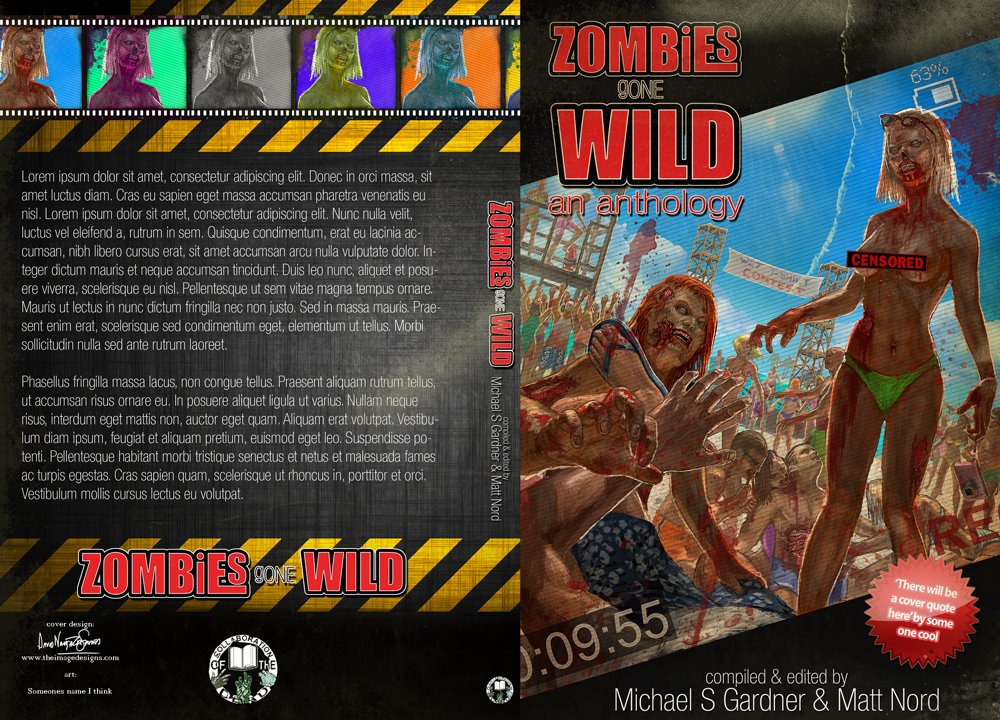
Cover to “Zombies Gone Wild” Anthology released!
I’ve wanted to show off this wacky cover for some time, but it just became official. I don’t really have a good explanation for this anthology, as far as all the types of stories it includes, but I know that my story, “What’s Eating You?” is a pretty twisted and darkly comedic zombie tale not for the faint of heart or squeamish. So my guess is that since the publisher indicated that my tale was just the type they were looking for that this book is filled with a plethora of twisted and darkly comedic zombie tales. Well, you can look at the cover and see that much, right?
More details to come, as the table of contents should be released fairly soon for Zombies Gone Wild.
Review of Craig DiLouie’s “The Killing Floor”
Craig DiLouie took the traditional infected/zombie tale and expanded upon it (and turned it on its ear) with his release of The Infection. The Killing Floor, the second book in this series, carries on where the last book left off, with surviving characters trying to comprehend the costly victory they had at the bridge, where they prevented a flood of infected from crossing the Ohio River and tearing through the refugee camp in nearby Defiance, where over 100,000 survivors live. Ray, one of the survivors from the battle, has been infected but has yet to turn. He is given a mercy by Anne, who allows him to crawl off to die on his own instead of getting a bullet in the head. But Ray doesn’t become your typical infected, instead turning into something like a Typhoid Mary, or a carrier of the infection, instead. This is the centerpiece of this book, with Ray trying to understand what his purpose is as the military and the militia, led by Anne, race to find him with the hope that his blood may hold the cure or to kill him, even as his new found capabilities make him even more dangerous than even the monsters or the infected.
We are introduced to two main new characters: Dr. Price, who is one of the only scientists that believes the infection is not manmade. He manages to escape the White House and is hidden in an underground bunker, but as the story unfolds is given the opportunity to go after Ray and perhaps find a vaccine or cure for infection. Rod, the other new character, is a soldier in the field working to clear out Washington D.C. of the infected when he and his men are assigned the task of bringing Ray in, dead or alive. Along with the remaining cast from the first book, we are given an impressive slew of characters whose stories intersect and come together for the exciting conclusion.
As the second book in what is likely a trilogy, the actual novelty of the infected are has worn off a bit, meaning we get to delve even deeper into the characters here and focus less on the different creatures that have come about with the advent of this plague. Even with some of the secondary characters there is plenty to sink your teeth into, as most of them do not come off as hollow cannon fodder, but real people. The author also does an excellent job of making the military aspects of this story believable without overdoing the jargon and technical areas of the story. The writing is crisp, sharp, and the story itself is intriguing-it does not rely on the unique nature of the infection (with its wide array of different life forms that appear to have the goal of not just running amok but its apparent lust to wipe out all other life forms) to carry the story forward, but the characters who give the tale its terrific depth.
The Killing Floor is a well-crafted follow up to The Infection and has me anxiously awaiting the third chapter in this saga.
The Killing Floor can be found here: http://www.amazon.com/The-Killing-Floor-novel-Infection/dp/1618680757/ref=sr_1_3?ie=UTF8&qid=1339807021&sr=8-3&keywords=the+killing+floor
Review of David Houchins and Scot Thomas’ Zombie Apocalypse Preparation: How to Survive in an Undead World and Have Fun Doing It!
Zombie Apocalypse Preparation: How to Survive in an Undead World and Have Fun Doing It! is sort of the goofy alter ego of Max Brook’s Zombie Survival Guide, which kept a straight face throughout its overview of weaponry, tactics, location scouting, and other related areas of interest when dealing with the inevitable outbreak of zombie mayhem. These days, with people getting their faces eaten off, children rising up out of their coffins, and a veritable cornucopia of other events happening that hint at a possible zombie apocalypse, checking out a guide or two on undead preparedness is not a bad idea. ZAP, as this guide is called for short, provides an amusing approach to taking the steps necessary to insure you survive the end of the world not only with the goal of making it through alive, but making it through alive in style and with a smile on your face.
Parts of this book are fairly routine survivors fare, covering the topics of weapons, shelters, locations, vehicles, etc. But the author’s snappy commentary adds entertainment value to the routine evaluations of different options you have available. Pop culture references abound and while not all of them will resonate with everyone in their audience, many of them brought a smile to my face.
One of the key elements of this book that does stand out as different is the final section, where the authors have come up with a wide array of zombie-related games to pass the time for those bored with the everyday routine of survival during the undead apocalypse. The detailed drawings add punch to the outrageous descriptions given. I won’t spoil the fun by listing out these different pastimes, but suffice it to say that they take traditional games and some new and unique ideas for games and make versions that will keep you on your toes…with risk to that part of your anatomy as well as many others if you decide to play them with actual zombies.
Overall, this is an entertaining survival guide. I thought the comedy was a little light in certain sections, and the use of some references got a little redundant after a while, but overall, a well done, fun read for the dedicated and not-so-dedicated zombie fan alike.
Zombie Apocalypse Preparation: How to Survive in an Undead World and Have Fun Doing It! can be found here: http://www.amazon.com/Zombie-Apocalypse-Preparation-Survive-Undead/dp/1618680269/ref=sr_1_1?s=books&ie=UTF8&qid=1339221769&sr=1-1
Review of Patrick and Chris William’s “Dead Meat”
Dead Meat is a zombie apocalypse tale told from the perspective of Gavin, a young man living in River’s Edge when an outbreak of what the media claims is rabies spread by rats has already overtaken the town. The military has been called in and at the start of the story it’s clear that this is no normal case of rabies. Gavin meets Benny, who is hiding out on the roof of a convenience store, a couple of days into the mess the ‘bees’ (what Gavin dubs the undead/biters, because they tend to swarm together when they attack) have created. Together, they try to make their way to Gavin’s sister and parents who live in another town, but naturally there are a tremendous amount of obstacles in their way, including the military, who are exterminating the living along with the undead with extreme prejudice in an attempt to control the plague.
While this story is in the traditional Romero mold with slow moving undead, this first person, present tense tale takes a different tact than many stories I’ve seen. You would expect this story to be about survival, which it is, and about dealing with human drama, which it also is about, but it really burrows down deep into issues of trust and how being a survivor changes a person much more than most. We go deep into Gavin’s paranoia and trust issues, as well as how tortured he is by what he is forced to witness and do to stay alive. While the story is about Gavin, it is Benny’s tale too, along with Rickett, an old recluse they happen upon, and Henry (Henrietta) a girl they also find during their trip. But the dynamic between Gavin and Benny is the highlight here-how difficult and ugly it is for them to gain one another’s trust and yet still not trust each other, how it seems that they’re at each other’s throats most of the time while still having to rely upon one another. It is a complex relationship and one that I was intrigued by from start to finish. The key element with this story is how each of the characters feels real, not limiting stereotypes with no depth, or even a meager attempt at giving them depth. Gavin is the main character but that doesn’t make him extremely the hero of the tale-his paranoia tends to get annoying at points, as does his mistrust of almost everyone around him. Benny seems to be an unapologetic sociopath at times, while at other times it’s clear that he hasn’t lost his humanity despite all the inhumane things he has been forced to do and seems to revel in. This story is as much a character study of these two as it is a saga of the zombie apocalypse. We see it all through Gavin’s eyes and so the outside elements are limited-we know nothing of the military except for his limited perspective, nothing about what is going on outside of narrow sphere of his experiences, and as such a lot of minor details slip to the wayside while the dynamics of his relationship with Benny, Rickett, and Henry are explored in tremendous detail.
Since I tend to favor zombie tales that devote most of their energy to the human relationships in them and how people are twisted and changed in a survivor tale, I found this story to be a highly entertaining entry into the zombieverse. It also has plenty of violence and action to spread around, making this something for pretty much all zombie fans to enjoy.
Dead Meat can be found here: http://www.amazon.com/Dead-Meat-Patrick-Williams/dp/1618680242/ref=sr_1_1?ie=UTF8&qid=1339033247&sr=8-1
Review of Steven Pajak’s “Mad Swine: The Beginning”
Mad Swine: The Beginning is a first person zombie apocalypse tale that takes place during the initial days of infection and the downfall of civilization. It begins in the city of Chicago and the moves out into the suburbs where the main character, a University Administrator and former military man, takes charge of the people in his neighborhood to defend against both the infected and the living. The zombies in this tale are actually not the living dead, but more accurately infected/still living, though the author essentially turns them into zombies by applying the same rule as you have with undead: you can shoot them repeatedly, but unless you get them in the head, they won’t go down. There is an interesting slant in that they still sleep, which makes for some interesting situations when the characters come across a few snoozing undead.
The story moves at a fast clip, with very little build up before the introduction of panic and mayhem enters the main character’s life after he has reported to work one morning. The infected are fast movers, so the infection, which seems to come out of nowhere, spreads like wildfire and makes the first few chapters an adrenaline soaked nightmare for Matt, our main character. It doesn’t take long for the reality of this uprising to hit home with personal loss which carries over for him as he manages to make it back home to the suburbs. He discovers that several communities have banded together to protect one another from the “crazies”, as Matt has dubbed them, and given his military background he is called upon to take the lead in his own gated community. Matt comes prepared, with a veritable arsenal and a brother who lives with him who also has military experience. Together they take charge and plan for the well being and safety of their people. Mad Swine: The Beginning takes place within the first few days after the apocalypse. It reads fast and easy and while much of the zombie action takes place prior to Matt’s transition to suburban leader from urban refugee, the focus on human confrontations is a priority from then on. I enjoyed some of the confrontations that offer up hints as to what is to be expected in the next book of the saga, including the clashes between the different neighborhoods and how they are forced to deal with one another.
Overall, this was a fun, entertaining zombie read. It doesn’t necessarily bring much new to the table with the zombies or the setting, but the main character is solidly developed and his story made for an interesting ride. While the book cuts off abruptly, the closing chapters set the stage for some potentially interesting developments in the second book of this saga.
I do my best to point out any concerns I have with each story I read and as is the case with every book, there were things I took exception to with Mad Swine. My main concern here has to do with what I would dub the chaos and the calm. By the chaos, I mean that the infection happens so quickly and spreads with such vigor that the world falls apart entirely around Matt in what seems like minutes. Things are such a blur at first that there is virtually no appearance by either the police or military in this story. The city falls to pieces almost immediately and the crazies rule the streets within hours. And by the calm, I mean how dramatically different it is within the suburban conclaves where Matt and most of the other characters in this book live. Everyone there seems to be on the same page, willing to fall in line with the new regime that Matt creates without questioning it or anything for that matter. Certainly, there is conflict between different neighborhoods, but it is limited and (at least in this book) fairly civil, all things considered. The transition from the chaos of the first part of the book to the calm of the latter portion is abrupt and would have made more sense had the chaos Matt sees in the city bled over into the ‘burbs a bit more. While Matt, would seem like a natural choice as a leader for his neighborhood with his military experience and rather excessive arsenal, the fact that everyone within his gated community goes along with that decision without question or any who appears to be reluctant about such an idea seemed a stretch to me.
Despite this concern that I had with the story, it remains a solid, action filled apocalyptic saga with interesting characters and a storyline that has me intrigued and curious about what happens next. I look forward to checking out the next book in the series when it becomes available.
Mad Swine: The Beginning can be found here: http://www.amazon.com/Mad-Swine-Beginning-Steven-Pajak/dp/1618680013/ref=sr_1_1?s=books&ie=UTF8&qid=1338266426&sr=1-1
A few changes on the horizon for my books…
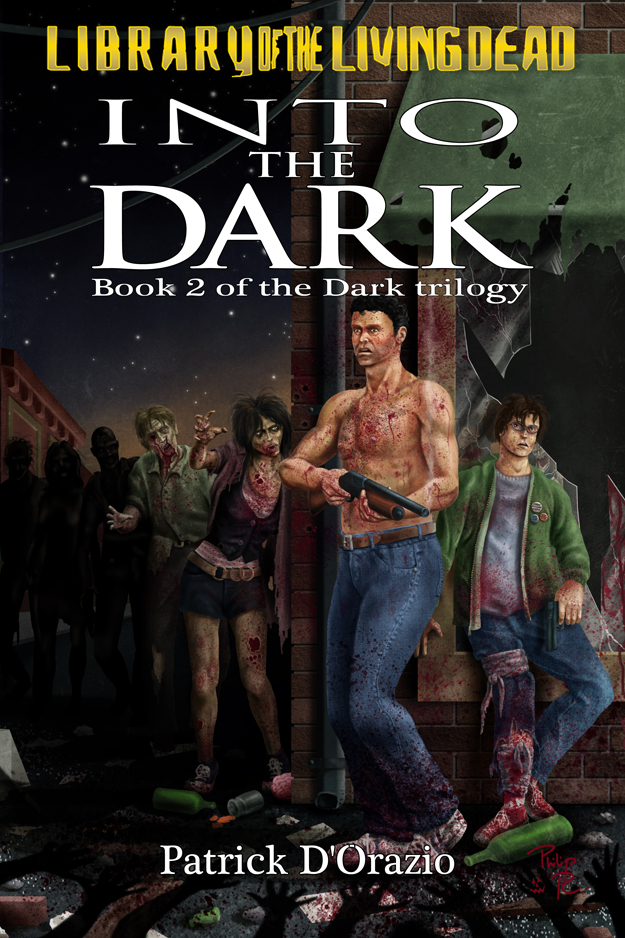
I wanted to make a brief announcement at this time, which will be a prologue to a more important answer coming up in the not so distant future. Instead of having some sort of big build up, I’m just going to come out and say it. I have acquired the rights back to my three novels from the publisher, Library of the Living Dead. This decision was made with a great deal of careful consideration on my part, and is based more on where I feel things are going for me in the future rather than anything that has happened recently, or in the past. Let me put it another way. Michael West, aka Dr. Pus, the owner of the Library of the Living Dead Press has been a spectacular partner for me over the past few years. He is a man who genuinely cares for the authors who work for him and have aligned themselves with the Library. The Library is, and always will be, a home away from home for me. The people who have been involved with the Library’s message boards over the years, as well as the other authors, editors, and artists are all fantastic people. So this departure is only for my books, not for me, and it will not change anything else. It is mostly due to the fact that at present, Doc is not moving forward to publish new books as he takes a break from that for a time. Unfortunately, time stands still for no man, and since my plan is to produce two more novels in this series, I needed to regain control of them so I can be sure they are in a home where the opportunity exists to publish the new chapters in this saga.
So for everyone out there who has purchased my books in either paper or electronic form, I thank you, as does Doc. All three books were top sellers for the Library, which makes me very proud and sort of stunned at how well they have done. If you have the paper versions of the three books, or want the first editions, my suggestion would be to grab them fairly soon, as they will no longer be available (at least new copies) very much longer. The ebook version of the trilogy has already been taken down and is no longer available on Amazon. The next time you see them, it will be very likely they will look a bit different than they do now.
As I mentioned, I will likely have another announcement to make about these books in the not so distant future, as well as where I go from here with my work. So stayed tuned for that.


Review of Jim LaVigne’s “Plaguesville, USA”
Plaguesville, USA tells a tale set in a world several years after much of the human population has been wiped out by a lethal virus. The timeframe is in the late 2070’s, and much of the United States has turned into a desecrated land filled with survies, as they are called: gangs, small fiefdoms, cannibals, mutants, and a few people trying to maintain some sense of civilization. We are introduced to Dr. Justin Kaes, an epidemiologist from the CDC in New Atlanta who has found himself in charge of a mission to prevent the “Sick,” as the plague has been dubbed, from reinventing itself and destroying what is left of the meager human population. He has been sent to collect the one man who has survived the original iteration of the plague and whose blood might help them create a vaccine for whatever new iterations may come about. He is Howard Lampert, a crusty, cranky old man of 102 who lives in Minnesota. The story picks up after Justin and his team have picked up Mr. Lampert and are on their way to San Francisco, where there are doctors waiting who have the resources to craft the potential vaccine. The doctor and his team’s massive RV has run out of fuel down in Oklahoma, where they are surrounded by gangs and religious zealots who also happen to be cannibals. We are introduced to Teresa, a member of one of the local gangs, who’s interested in hitting the bricks because she has grown weary of the Blood Claws (not to mention that more than one member of the gang has tried to rape her). She crosses paths with Justin as he and the others are trying to figure out what to do to keep moving west and the duo form an unlikely partnership. The story tells of their adventures, which include an onslaught of virtually every post-apocalyptic danger imaginable, except perhaps for zombies, as they try to complete an almost impossible mission.
Plaguesville gives the reader a thoroughly realized post-apocalyptic world that isn’t set in our time, but over a half a century in the future. Each chapter provides a nice little beginning blurb giving the reader a small taste of the world before the fall, with advertisements about the food, entertainment, and culture that adds additional flavor to the story. As readers will note, this tale has an interesting arrangement with the characters. Justin is the main character and we see the world through his eyes in many ways, but as Mr. Lampert comes from our day and age (he would be around 38 right now), it is easy to identify with him and his perspective on a bombed out, shell shocked world of plague and Mad Max sensibilities. Justin is a doctor on a mission who finds himself attracted to the barbaric and yet incredibly enticing Teresa, and Mr. Lampert brings an old fashion sensibility to the story that is entertaining and somewhat humorous in spots, while getting dark and gruesome in others. While Justin the voice of ethics and morality in a world with very little of such things, Lampert is the grumpy voice of reason and sanity in a world gone mad.
The story runs its cast through several different adventures-they meet the good, the bad, and the ugly that remain in the world, and there are quite a few secondary characters’ stories told that intertwine with the main cast as the tale runs toward its completion. Again, the author has done a good job of laying out a detailed post-apocalyptic world and gives us a saga with plenty of action and adventure. Time and again, Justin’s mission is on the brink of oblivion, but he continues to maintain hope and believe that as long as Lampert remains alive they can resolve things. In some ways, it felt like there were almost too many near misses in the story, but it kept things moving at a fast clip. Overall, this was a fun read, with a few gentle messages that weren’t too heavy-handed about corruption, craving for power, and man’s undeniable lust to cause his own destruction. The growing attraction between Justin and Teresa is handled with a deft hand that made it feel believable and touching, despite the fact that these two people were worlds apart in so many ways. If I have a criticism of this book, it would perhaps be that the story does not feel complete. We are only introduced to the CDC team once they’ve broken down in Oklahoma and not when they set out from Atlanta, pick up Mr. Lampert, and make their way through so many other adventures leading up to that point. Granted, the book is already a healthy 350 pages, but I felt as if there were more stories to be told. Even with this minor complaint, this is an entertaining and robust post-apocalyptic tale with entertaining characters and a setting that was quite compelling.
Plaguesville, USA can be found here: http://www.amazon.com/Plaguesville-USA-ebook/dp/B0078FN0RA/ref=sr_1_1?ie=UTF8&qid=1336273247&sr=8-1
Review of Sean Schubert’s “Infection: Alaskan Undead Apocalypse”
Infection: Alaskan Undead Apocalypse takes place mainly in Anchorage, and begins with a family of tourists from Minnesota who are traveling to Alaska on vacation. The younger boy, Martin, has brought along a friend, Danny, and the family plans on spending time out in the woods at a cabin near a glacier. Almost immediately upon arrival at the cabin, Martin, his sister Jules, and Danny discover what appears to be a dead body stuck in the melting glacier. Thinking it is a caveman, they pose next to it, taking pictures. When the caveman turns out to be a thawed zombie, and Martin gets bitten, the family races back to Anchorage to a hospital as Martin’s health rapidly deteriorates. All hell breaks loose when the boy ends up dying in the hospital, gets back up, and attacks everyone around him.
Things rapidly spin out of control from there, with a plague of undead spilling outside the walls of the hospital and onto the streets of Anchorage. Within a matter of hours, the entire city is under siege by a horde of fast moving undead devouring and infecting everyone in their path.
Throughout the course of this book, the first in a planned trilogy, we are introduced to the people that make up two main groups of survivors. One group is led by Dr. Caldwell, who was treating Martin at the hospital, and the other lead by Neil, an office worker who witnesses one of the first zombie attacks outside of the hospital (and the two surviving children-Jules and Danny-end up with him as well). The pages telling the story of these characters are intermingled with various graphic scenes of carnage as Anchorage is ripped to shreds and the police and military are unable to do much to stop the tide of death rushing over them.
Infection: Alaskan Undead Apocalypse is a fun, fast-paced tale of zombie mayhem that barely gives you time to breath, and zombie fans who crave plenty of gore and undead action should enjoy it. The main characters are well developed and give the reader a few folks to root for as well as one in particular to loathe, which keeps things interesting from start to finish.
As I always try to do, I point out areas of concern with a story, and I have a couple of them with Infection.
The first is a minor point, but one that I feel deserves mentioning. Alaska appears in the title of the book, and as such, I expected this story to bring some unique elements to the table based on the locale. Unfortunately, while the author knows Anchorage like the back of his hand, the city felt no different than any other place on the map. Perhaps the sequels will insert more of the distinctive ‘flavor’ of Alaska in them that will make this story stand out more.
My second issue has to do with one particular character, a police officer. I felt that he would have been far more intriguing character if he wasn’t a cop, but I found it hard to buy into him being an officer of the law. From the beginning, he makes no effort to take a leadership role in a crisis situation, letting Dr. Caldwell handle that role in a non-medical crisis. All I know is that if I were trying to flee from the impending apocalypse and I was in a group with a police officer, I would be looking to him for direction, not a doctor (even as you are racing down the halls of a hospital). But strangely enough, no one calls him on this until well into the book, and by then, I was wondering how this guy ever passed whatever psychological test is required to become an Anchorage cop in the first place. Again, he would have been a far more interesting character were he not a cop.
Overall, I felt that this story has the potential to be a solid zombie trilogy. Infection doesn’t really bring anything new to the table-there are no big surprises to be had for zombie fans here-but my hope is that the author turns things up a notch in the sequels to give this story a flavor of the northlands that leaves a lasting impression.
Infection: Alaskan Undead Apocalypse can be found here: http://www.amazon.com/Infection-Alaskan-Apocalypse-Sean-Schubert/dp/1618680161/ref=sr_1_1?s=books&ie=UTF8&qid=1335667874&sr=1-1
Review of Matthew Warner’s “Blood Born”
Blood Born starts out as a horror mystery, where victims of rape in the Washington D.C. area are all impregnated and the gestation period is accelerated to the point where it is forty times faster than normal. In other words, these women will produce a full term baby within one week. The case is being handled by Detective Christina Randall and we are introduced to her and Margaret Connolly, the mother of one of the rape victims, who also happens to be a fertility specialist working for a local fertility clinic that also does genetic research.
As with any mystery, we are given hints and details as to the M.O. of the rapist as the due date on the first few victims draws near and it becomes clear fairly quickly that the rapist is not quite human. The pieces of the puzzle begin to fit together, but then the book took a dramatic change.
This tale becomes an entirely different type of horror novel somewhere between a third and halfway through, where monsters run rampant, annihilating everything in their path. The transition was jarring, to say the least, though I don’t necessarily mean that as a negative. But be forewarned that while the mystery continues to unravel all the way up until the end of this tale, it takes a backseat to the violent and graphic action that dominates the second half of this book.
This story has a flavor of a patient zero type apocalyptic tale, with a significant build-up to the point where all hell breaks loose. When it does break lose, the story turns on the afterburners and blasts ahead at a hundred miles an hour. The author does a solid job working to explain the science behind the beasts in the story, though I was left with plenty more questions about them and how they would co-exist with the rest of the world. That is the challenge with diving into the science of something like this-there are often a lot of questions that are difficult to answer vs. making the creatures in question a complete mystery.
Overall, this is a fast paced book with a lot of surprising deaths and plenty of gruesome action. With rape being a key part of the story, it probably won’t appeal to certain chunk of audience out there, but it is a well written scientific tale of horror. While I was expecting it to be a more subtle mystery throughout, when the gears shifted and story changed from that to an adrenaline fueled nightmare, I was able to adapt my expectations. The author keeps things moving at a good clip throughout and this was an easy and entertaining novel to read. I do sense that there is a distinct possibility of a sequel based on the ending, though this book can definitely be considered a stand-alone tale.
Blood Born can be found here: http://www.amazon.com/Blood-Born-Matthew-Warner/dp/0979234638/ref=sr_1_3?s=books&ie=UTF8&qid=1335452721&sr=1-3
Review of the movie “The Divide”
The Divide is a bare bones apocalyptic tale that starts moments after the world dies. Nuclear bombs have been dropped on Manhattan and several people living in an apartment complex rush to the fallout shelter the super has created in the basement. The Super’s intention was to go it alone, but his tenant’s force their way in as everyone above is dying from the blasts. Almost the entire movie takes place in this shelter with the survivors initially planning on waiting until the radiation has died down before they check things out on the surface. They have food, water, and power, so things seem to be okay at first-the best they can be based on the circumstances-but things begin to erode and there are various struggles for power and control among the characters.
There is a nudge from the outside world as soldiers invade the shelter and disrupt the relative calm early on in the movie. The audience is given little information on these soldiers, what is going on up above, or why they end up doing what they do to the group. The movie’s focus is on the dynamics of the nine people in the shelter and injects external influence only in two small, somewhat confusing doses.
The name of the movie is apropos on several levels. There is the obvious divide between the world above and world within the shelter, the multiple divides that occur with the group as it changes and morphs over the course of the movie, and the divide among viewers of this film on whether it is a realistic portrayal of people trying to survive under nearly unthinkable circumstances or is gratuitous and over the top in many ways.
This movie is a grim, dark, and dank experiment where the characters are put in a box and the audience gets to watch their humanity dissolve. There are power struggles to control resources, trust issues, alliances formed and broken, and the continuous erosion of any sense of civility from start to finish of this film. This story revolves around choices-how far are you willing to go, what depths are you willing to sink to…what will you do not only to survive, but to maintain control over yourself and those around you? It pulls no punches, showing the dark, ugly side of what we all have the potential of becoming under nightmarish conditions.
The Divide is a mixed bag. I can’t say that I bought into the Roseanna Arquette character and her rapid transformation from loving mother to willing rape victim, and some of the other characters were a stretch as far as believability, especially as the tale progressed. I was somewhat confused by the soldiers and why it was necessary to bring them into the story-the influence they had could have been handled by the group, for the most part. I also felt that at two hours run time, the movie could have sliced out about twenty minutes or so and still presented the same tale-it seemed to drag in places. Even with these complaints, the movie drew me in and kept me interested as the characters warped from being normal people to survivors buried deep in a hole and knowing they will never break free of the prison they’re in. It’s not a film that I think I will ever have the urge to watch again, but I will remember it for a long time come.
The Divide can be found here: http://www.amazon.com/The-Divide-Lauren-German/dp/B007549W62/ref=sr_1_3?ie=UTF8&qid=1335307402&sr=8-3
“Read The End First” now available over at Amazon!
Another project I worked on and am very excited about has come to fruition and is now available over on Amazon. Read The End First has the unique premise of showcasing 24 different tales of the end of the world, each based in a different time zone. Because of the nature of the project, this was an invite only anthology, and each author had to pick a particular time zone and write a story that would make sense given their location on the globe. My particular story takes place in Bethlehem and is entitled “What Rough Beast.” You’ll just have to guess at what the story is all about.
So check this one out, there is a great list of authors involved, including Stephen North, Suzanne Robb (who edited it), Michael S. Gardner, Rebecca Snow, A.J. French, Craig Saunders, John McCuaig, David Dunwoody, Wayne Goodchild, Adrian Chamberlain, D.A. Chaney, Hollie Snider, William Todd Rose, and many more that I apologize I can’t remember right off the top of my head.
So click on the cover and head on over to Amazon to check out your very own copy of Read The End First.

Review of “Rise” by Gareth Wood
Rise was written as a blog online originally and as the author mentions in the prolog, he wrote it as the days passed in 2004-2005 when the story takes place. He paid attention to the weather patterns, studied the environments he was leading his characters through, etc. So essentially, this book was fairly early to the zombie writing party-before the onslaught of books started showing up in places like Amazon and on bookshelves at bookstores. Of course, with its introduction via Permuted Press to a wider audience in 2012, it comes during the thick of things-when journal type tales of the apocalypse have been done on a regular basis over the past six or so years, along with a wide array of other first person and third person zombie sagas. Credit to the author for crafting this piece before so many others had taken a swipe at the genre-I wish I had read it when it had originally come out because I am sure it would have felt truly fresh and new at that time.
Like other journal format tales, this story goes through the daily struggles of a survivor (this time a man named Brian who lives in western Canada) from just before until almost a year after the dead have risen. The journey we are treated to takes us on a wandering path where Brian and his sister meet up with other survivors, avoid the undead, try to gather supplies, avoid other desperate humans, interact with the military, go on rescue missions, and just try to cope with a world turned upside down. Journal writing gives an author an opportunity to detail out all the minor details that many other tales would leave out simply because they tend to focus on the elements that move the story forward at every step of the way. Journals do this too, but the whole idea seems to more or less be focused on giving you a real flavor of how people cope, which requires getting down to the nitty gritty.
Most of my criticisms of this tale would stem from the journal format and not the author’s writing, which is solid and keeps things moving. One of the things that seem almost impossible to do with this format is allowing the reader to get into the moment with the characters on the page. This happens because there is virtually no dialogue-nothing that anchors the action and relationships in the present moment. Almost always, the story is being written a day, or even several days, after the events being chronicled have occurred. This author, like others, tends to announce critical details in the first sentence of every new entry, which allows you to know, in vague terms, what is about to happen on the next few pages of the story, and in the next few days of the lives of the characters. Journal entries lack tension, though they provide you with a detailed picture of events. This is the blessing and the curse of this writing format.
If there was a genuine criticism that I have for this tale, unrelated to the journal format, is the fact that the story seems to carry on beyond its natural ending point through several more adventures of the main character. My guess is that in the original writing of the blog, the author was trying to determine a stopping point and picked one at a place where there is a relative lull in action and perhaps when he grew tired with relating the saga. With that said, the story could have stopped much earlier, or could have carried on for months and even years beyond the point where things are concluded-through the course of the apocalypse. I suppose that is another challenge related to journaling; the days of your life are not set up in neat, tidy condensed tales that will fit perfectly into a book-like story. Instead, it moves on, with different story lines always happening and intertwining at all times. In essence, this story could have gone on for another hundred pages or more, and could have ended fifty plus pages earlier, with the same result.
I don’t intend for my criticism of the journal format to speak as a negative about the authors writing capability-he has written an entertaining story in a format that is challenging, to say the least. It kept me reading from start to finish and I was definitely entertained. Rise is a solid entry into the zombie genre, and I hope to see more (perhaps in another format) from this author.
Rise can be found here: http://www.amazon.com/Rise-Gareth-Wood/dp/1618680102/ref=sr_1_2?s=books&ie=UTF8&qid=1332714817&sr=1-2
Zombie: The Other Fright Meat is now on Amazon!
Well, it didn’t take long for this one to make its way over from Createspace over to Amazon. Since Amazon is easier to deal with as far as ordering is concerned, please check this book out there. As I have mentioned before, it contains one of my favorite short stories I have ever written, Cicada. It is a story about generations that live before, during, and after the zombie apocalypse, told in relation to the appearance of Cicadas-a particular species that comes about every 17 years. It is a tale that speaks of generations-fathers to sons, and how life begins anew, even when there is death all around you.
So please check out Zombie: The Other Fright Meat, which also contains stories from a great list of other authors who love to write traditional tales of zombies, when so many other monsters are “selling out” and going out and doing teen romances and such. Just click on the cover image to head on over to Amazon. Thanks!


 Patrick D'Orazio's Blog