Permuted Press Kindle E-Book Sale!
Well it is Friday the 13th and while many folks consider that bad luck, I think it is a great day…and the start of a great weekend. Especially for fans of great apocalyptic fiction. Permuted Press, my publisher, has decided that this would be a great weekend to promote the heck out of virtually every one of the books they offer on Kindle by having a sale that runs through Sunday. So go on over to Amazon to check things out. Just click on the picture below and you’ll be sent to the list of books for sale, including all three books in my trilogy: Comes The Dark, Into The Dark, and Beyond The Dark. Plenty of other fantastic books can be found on sale, including plenty of ones that I’ve reviewed here. So here is your chance to pick them up for either 99 cents or $2.99 when they’re regularly around $7.99. So check it out, and as they say over at Permuted, Enjoy the Apocalypse!

Review of “Cthulhu Unbound 3” by Permuted Press
Cthulhu Unbound 3 consists of four novellas, each with their own slant on Lovecraft’s mythos. Overall, the writing and storytelling is solid and the stories are what you both desire and expect of tales told about the realm of dark gods and menacing monsters.
Unseen Empire by Cody Goodfellow is a western that takes place primarily on and beneath an abandoned Indian reservation in Oklahoma, where a half-Indian tracker must go beneath the earth to find out what happened to the people who suddenly disappeared from the reservation. As he and the detachment of U.S. soldiers go deeper into the underground lair where they suspect the Indians have fled to, the reader is treated to several flashbacks of the main character’s past life and it slowly becomes clear what dark forces he is being compelled to face within the dark depths.
Mirrorrorrim by D.L. Snell focuses on an odd therapy group and its even odder therapist. The main character has blank spots in his memory and another member of the group, a woman who he is drawn to, shares a very strange connection with him. They fit with one another like pieces of a puzzle, or like the title suggests, mirror image parallels.
Nemesis Theory by Tim Curran introduces the reader to a maximum security prison and a select group of inmates who are beginning to realize that they are on a crash course with a gruesome nightmare that none of them will be able to avoid. Death and far worse is creeping closer and closer to them all every night, from far out in the galaxy. If you are familiar with Tim Curran’s work, you know he is a maestro when it comes to describing gore in loving detail and this story is no exception.
The R’lyeh Singularity by David Conyers & Brian M. Sammons is a tale of espionage and the efforts of two spies to stop greedy governments and corporations from tampering with inter-dimensional ‘goodies’ they have discovered on earth, as well as preventing the end of all humanity when darkness tears through a rift at the bottom of the pacific ocean where a mega-corporation is drilling…not for oil, but for something far more menacing and alien.
I enjoyed each story for their unique spin on the Cthulhu mythos, with my favorite being the last member of the quartet. The story was high energy spy thriller that integrates the horror of the Cthulhu mythos effortlessly. My one critique of this story is that there were a noticeable amount of typos that weren’t as prevalent in the other three stories. It was a minor distraction but worth mentioning. The other three stories were equally entertaining, for different reasons. Tim Curran does an excellent job in his tale building the dread levels to an almost unbearable level for the inmates in his doomed prison, with both mysterious events and visions riddling them with newfound terrors on a daily basis. D.L. Snell has created an intimate tale of technology gone amuck and strange interpersonal relationships, while Cody Goodfellow’s plunge into the old west and an underground city of the damned felt like a diabolical quest that I was cursed to complete alongside the main character.
For fans of Cthulhu and Lovecraft, this is a solid contribution to the mythology and one worth checking out.
Cthulhu Unbound 3 can be found here: http://www.amazon.com/gp/product/B009O3XFBA/ref=cm_cr_thx_view
Review of Gareth Wood’s “Age of the Dead”
Age of the Dead is the sequel to Gareth Wood’s Rise, which was released by Permuted Press last year, but was originally created in a serial blog format several years back. The first story tells the tale of Brian and his experiences during the weeks and months following the rise of the undead. It provides us with his efforts to survive with his sister and the woman he meets who eventually becomes his wife. It ends with him the leader of a scavenging team sent out from Cold Lake, where the military has created a safe haven for most of the survivors in Western Canada. Age of the Dead continues where Rise left off, with Brian and his crew going on missions to either retrieve much needed supplies out in the wastelands or to find more survivors.
Both books were written in first person, with the first book being done in journal format. Everything is told from Brian’s perspective with all the limitations and advantages that format yields. The author changed things up a bit with Age of the Dead, and while the story is told in first person once again from Brian’s perspective, it is no longer in journal format. There is dialog and there isn’t that sense of premonition you get from a journal where the author hints at the action to come at the beginning of every journal entry. A journal is like reading a newspaper article about something that happened the day before, whereas the new format the author uses in his second book puts the reader right into the action.
The writing here is smooth and the story flows well, though there really isn’t any specific direction the author seems to be taking with the story. I had mentioned in my review of Rise that the book could have cut off earlier-when Brian and company find their way to the safety of Cold Lake, but carried on with his first missions doing salvage. This story, much like the last part of the previous book, carries on with that theme. The action is more intense and there is a willingness here to let some of the characters die, which was a change from the first book. The adventures Brian and company have were enjoyable to read about, but I was often left wondering where things were headed. There are hints toward the end of the book that the story might get more focused in the third installment, which shows good promise.
Overall, the quality of this installment is good and the writing format is more satisfying than the first book. There is more emotional heft to Brian here-the stakes are higher than before. At the same time, I would like to see the story take a more specific direction. The missions Brian takes on with his crew could go on indefinitely. But as I already alluded to, there are indications that the third book will have a more specific direction and a more defined objective in mind. I look forward to seeing what the author does with this tale going forward.
Age of the Dead can be found here: http://www.amazon.com/gp/product/1618680501/ref=cm_cr_thx_view
Review of Tim Curran’s “Cannibal Corpse, M/C”
Tim Curran’s Cannibal Corpse, M/C is a wild ride into a post-apocalyptic wasteland with John Slaughter, Pittsburgh Chapter President of the Devil’s Disciples, leading the way. He is the last of the free members of his motorcycle club, one of the 1%ers that commits everything they have and everything they will ever be to the patch they wear on their sleeve and what it represents. The world has ended, or so it seems, and the dead have risen from the grave. Strange rains filled with mysterious red worms have infected much of the population, turning them into something that resembles zombies, though this crop of the undead are pretty unique. They crave human flesh, but they continue to have some semblance of the minds they once had. They are evil, semi-demonic puppets that not only devour but gleefully torture the living. The western half of the U.S. is a wasteland of the dead now, with what remains of the country under government control a sliver of what it once was. The dead rule, along with the barbaric living militias like the Red Hand and the mutants that were created after nukes were dropped to stem the tide of the dead. Into this wasteland heads John, who has too many people chasing him and too much desire for the freedom of the open road to remain in civilized territories. At least until members of the military catch up with him and put him on a mission he can’t refuse. They’ll free some members of his club that are in prison to ride with him into the wastelands where they need to save a biologist who may have a cure for the plague that has caused the rain of worms to fall.
Cannibal Corpse, M/C is definitely not your typical apocalyptic zombie tale. The author seems to know quite a bit about biking culture and John’s rough demeanor and loyalty to his friends kept this one entertaining from start to finish. John is almost fearless, almost ruthless, almost like his club’s name would hint at: a disciple of the devil. He kills without remorse, he is brutal, and he is vicious, but there are hints of his humanity as well that sneak through during this story that made him an interesting character and someone who you can find just palatable enough to root for when he is dealing with the hell on earth that surrounds him. While the story starts out as more or less an adventure tale that takes place on the open road, it becomes something more dark and sinister with every page. I didn’t expect the twists and turns that came about, especially in the second half of the story, but found them intriguing nonetheless.
Where things bogged down for me with this saga was in the hyperbole the author uses to describe things, especially in the latter half of the book. Not only is the gore in Technicolor 3D, which is in and of itself not a bad thing (in fact, for the gore hounds out there it is probably a big plus), but many of the details of the story are over described in lurid detail, distracting from the narrative in some ways. I don’t consider this to be a major issue with the story, because it still read fast and easy and I was compelled to finish this intriguing story, it just felt like the descriptions went further than necessary in several instances.
Despite this minor gripe, this was a fun, entertaining apocalyptic tale. If you like your zombies traditional, this one probably is probably going to be hard to swallow, but it is worth checking out even for the zombie “purists” out there, because Slaughter is a fascinating and entertaining anti-hero and a one bad mutha.
Cannibal Corpse, M/C can be found here: http://www.amazon.com/gp/product/1618680587/ref=cm_cr_thx_view
Beyond The Dark is available in all formats!
Permuted Press has completed the release process for Beyond The Dark with paper, ebook, and audio versions all now available. This finishes off the new version of the trilogy, and as I mentioned when the ebook version was released, this version of Beyond The Dark has the Dark Stories that were included in the original ebook trilogy release, plus some new additions, including a short story originally seen in “Eyewitness: Zombie”, an anthology produced by May December Publications. This is a tale of a National Guardsman told in first person which takes place in the early days of battle to fight the undead plague. There is also a brief appearance by two of the characters that appear in the trilogy toward the end of the story and hints at their future plans. A brand new Dark story makes its debut in this novel. Lydia, one of the characters introduced in Into The Dark was one of the few key secondary characters who didn’t get the flashback treatment. One of the reviewers of the original Dark Stories was disappointed she didn’t get the same treatment as everyone else did. I agreed, and since I always knew what Lydia’s history, I was able to craft her story for the release of this book in short order. I have a great fondness of Lydia and I hope that you enjoy the tale of her first exposure to having her world turned upside down by the undead plague. When people ask me what my favorite book of the trilogy is, its sort of like being asked to to choose between your children. I sort of feel awkward answering that question. But, since I have always thought of the trilogy as one saga, I do feel that Beyond The Dark does comprise the parts of the tale that are the most compelling, the ones that wrung the most emotions out of me in writing it. It is also the book that gets the highest praise-a lot of ‘he saved the best for last’. There is more stories to be told in this world and I plan on revisiting it, but the Dark Trilogy stands on its own, and Beyond The Dark is my favorite part of the trilogy. There, I said it. I still love Comes The Dark and Into The Dark, but this is the piece of the puzzle I’m most proud of…and I hope you enjoy it. Just click on the cover and you’ll be taken to a page that lets you choose which version of the book you want. Thanks!

Beyond the Dark now available in ebook format!
Permuted Press has released the final chapter in the Dark trilogy, Beyond The Dark, in ebook format. Soon to be followed by audio book and paper formats, this completes the updated and revised version of the trilogy, with Dark Stories included-two of which even those folks who read all the Dark Stories I had to share in the previous electronic version have missed out on. One of which is a story told in first person, called “A Soldier’s Lament” which is tied into the world of Jeff and company-with a couple of characters from the books showing up. This particular story, which also appears in “Eyewitness Zombie” from May December Publications, an anthology of first person accounts of the apocalypse, is a bit different, and is definitely one I’m proud to have in this tome. The other story was written specifically for this book, and tells the back story of Lydia, one of the key secondary characters introduced in Into The Dark. In many ways, it is my favorite, because Lydia is a character who has grown to mean more to me in the past couple of years-she has elements of my late mother and sister in her, and she is a strong character who I love dearly.
And while everyone will assume something about the new cover of this third book…as in, the girl on it is a zombie, I will say this: don’t be so sure. You’ll have to read the story to find out more. 😉
So please, check it out, and stay tuned for further updates for the paperback and audio formats of the book, coming soon.
Here is the press release from Permuted Press:
The 3rd and final book in Patrick D’Orazio‘s Dark Trilogy, BEYOND THE DARK, is out now in eBook!
“Grabs you by the ears and does not let go. We’ve heard the phrase save the best for last … well, that is exactly what happened with this trilogy.”
—Heather Headshot Faville, Doubleshot Reviews
Amazon Kindle: http://www.amzn.com/dp/B00CELKAR6/permutedpress-20
NOOK: http://www.barnesandnoble.com/w/beyond-the-dark-patrick-dorazio/1100076429?ean=2940016404011
Smashwords: https://www.smashwords.com/books/view/307399

Into The Dark now available in all formats!
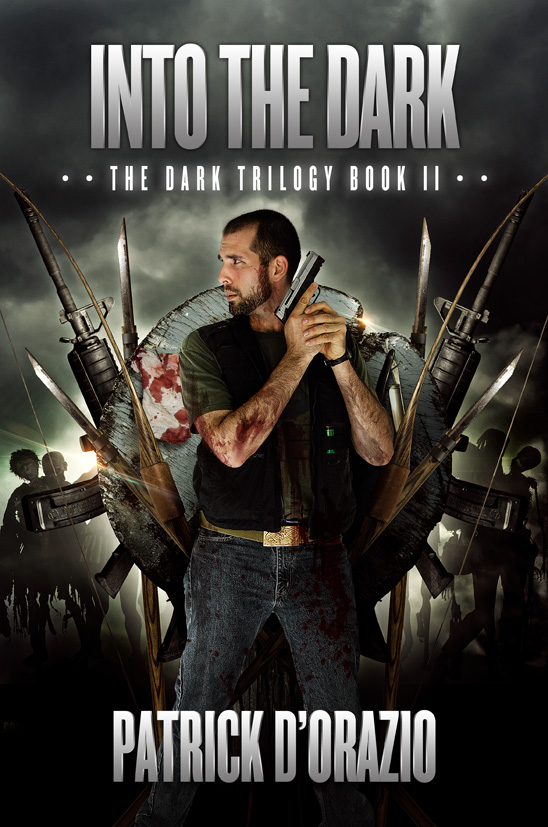
Things keep moving along quickly with Permuted Press and the Dark Trilogy. Their latest wonderful move? Releasing Into The Dark in all formats. So you can get this re-released version, with all the additional Dark Stories, in ebook, paperback, and audio versions. Just click on the cover below and you can go to Permuted’s website, where you can pick your poison. So check it out in all its glory:
Six weeks ago a mysterious virus came out of nowhere and engulfed the world.
Jeff Blaine did his best to hold his family together and protect them from the horrors scratching at their door. But, in the end, they were ripped away from him like everything else that ever mattered.
Lost and alone, Jeff’s only option is to destroy as many of the monsters as he can. But when he discovers Megan, George, and Jason, three other survivors not interested in giving up just yet, he reluctantly accepts that there might still be a reason to fight and live to see another day.
Traveling through the blasted landscape of their new fallen world, the quartet discovers that the living dead aren’t the only danger with which they must cope. Even other survivors who promise safety and security from the hordes of ghouls roaming the wastelands will test loyalties and their faith in humankind.
Jeff and his small band of newfound friends must forge a semblance of life in the newly blighted world. And they will have only the light of their own humanity by which to navigate as everything around them descends into the dark.
Comes The Dark E-Book Sale!
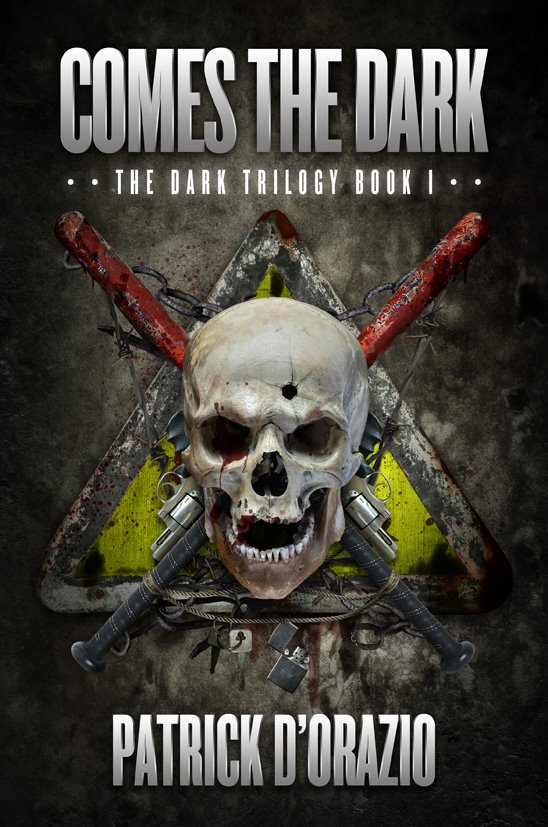
That is correct, ladies and gents, Permuted Press has put Comes The Dark on sale for a limited time in ebook form. Pick your poison…or version (whichever makes more sense) and drop on by one of these friendly online establishments to pick up your copy today, on the cheap!
The end came with a whimper, not a bang. The mysterious virus came out of nowhere and engulfed the world in a matter of days. Everyone who was infected seemed to die…and then rise again. Governments collapsed, armies disappeared, and entire civilizations turned to dust as the human race tore itself to pieces.
Jeff Blaine had a good life: a beautiful wife, adorable children, and a nice house in the suburbs. He liked his job, loved his family, and spent his lazy suburban Sundays out on the deck, barbecuing with the neighbors. Things were perfect until everything fell apart. And no matter how hard Jeff tried, he could not spare his family from the horrors scratching at the door.
Now, with his family gone, his life in ruins, the only thing left is raw anger and pain. As the world continues to sink into darkness, Jeff does as well. So he ventures out into the desolation with no better plan than to destroy as many of the monsters that stole his life away before they destroy him as well.
But soon Jeff will discover other survivors unwilling to give up. They will force him to decide whether or not to give in to the venom that gnaws at his soul. Should he continue to fight to survive, or succumb to the things that come with the dark?
Permuted released “Into The Dark” in ebook format!
Things move quickly around here. It wasn’t too long ago that I was touting the re-release of Comes The Dark from Permuted Press. Suddenly, it’s time for the release of the second book, Into The Dark, in ebook format! As with the first book, the Dark Stories I originally created to be a part of the books are back in each individual release, added to the end of the main story. So the reader has the opportunity to delve deeper into the lives of the secondary characters introduced in each book in a short story format. Check it out…and if you don’t mind, leave a review on Amazon, Goodreads, or at Barnes and Noble if you have the time. Thanks!
Six weeks ago, the mysterious virus came out of nowhere and engulfed the world.
Jeff Blaine did his best to hold his family together and to protect them from the horrors scratching at their door, but in the end, they were ripped away from him like everything else that ever mattered.
Lost and alone, Jeff’s only option is to destroy as many of the monsters as he can. But when he discovers Megan, George, and Jason, three other survivors not interested in giving up just yet, he reluctantly accepts that there might still be a reason to fight and live to see another day.
Traveling through the blasted landscape of their new fallen world, the quartet discovers that the living dead aren’t the only danger with which they must cope. Even other survivors who promise safety and security from the hordes of ghouls roaming the wastelands will test loyalties and their faith in humankind.
Jeff and his small band of newfound friends must forge a semblance of life in the newly blighted world. And they will have only the light of their own humanity by which to navigate as everything around them descends into the dark.
Stay tuned for a full selection of links to all versions of the book, but for now here are the links for both the Kindle and Nook:
http://www.amazon.com/dp/B00BWF8WHU/permutedpress-20
http://www.barnesandnoble.com/w/into-the-dark-patrick-dorazio/1100075804?ean=2940016358963

Review of C. Dulaney’s “Murphy’s Law (Roads Less Traveled Book 2)
Murphy’s Law, the sequel to Dulaney’s first book in the Roads Less Traveled trilogy, “The Plan” takes place after the winter at the end of the first year the world had to come to grips with Z-Day. The survivors of the first book are prepared to set out on their quest to find the prisoners who caused them so much grief and destroyed their home a few months back. Kasey and company are hungry for revenge.
The story shifts directions somewhat when the crew comes across a larger group of survivors who have staked their claim to a prison on the West Virginia-Ohio border. Things also change when it becomes clear that the zombies are transforming-at least some of them. Newer undead are moving faster and are more cunning than the slow moving zeds of the first book. A mutation, Kasey and company suspect, but they have no way of knowing why this challenge to them surviving has occurred. What they do know is that these fast movers will be creating all sorts of troubles for Kasey, Jake, Mia, Zack, and Nancy, the core group that made it out alive of the first book, along with the survivors at the prison. The two groups form an allegiance, despite a few troublesome members of the new community that aren’t particular fond of Kasey and her group.
Often, the second book in a trilogy doesn’t really have as much of a chance to stand out as much as the first or third book. Its job is to transition us to the final act in the saga-often it isn’t as intriguing as its counterparts. I do have to admit that Murphy’s Law was, for me, was a better book than the first in the trilogy. While I enjoyed “The Plan”, I think the author has gained a stronger voice here for her characters. My pet peeve about changing perspectives back and forth from first person to third person remains from the first novel, but it felt much smoother in this book-far less of a distraction. Perhaps it is because Kasey, as a character, has grown on me. There is more to her, as well as the friends surrounding her. Michael, the leader of the community at the prison, is also fairly well fleshed out as a new main character that is likable. The story also seems to move at a faster clip, or so it felt and the advent of the fast zombies has definitely given the story some new intriguing elements to contend with.
As far as issues I had with this story, they were somewhat limited and going into detail on the main one would perhaps present a spoiler. I guess the best way to put it without giving anything significant away is that I was somewhat surprised at the level of tolerance the people living in the prison had to a particularly deadly choice Kasey makes in the story. I doubt that I would have been as understanding as most of them were. That decision does drive the story forward, so it is necessary, but still left me frustrated with both her actions and their reactions.
The characters are a mixed bag. I stated that I wasn’t a big fan of Jake in the first book, though he goes through some interesting transitions in this book that make him grow on me a bit more. He’s still a bit annoying. Kasey is still a take charge leader who is both likeable and confounding at different times, while Mia seems to be present, but I don’t feel that she necessarily gets fleshed out any further in this book than she already was in the first novel. Nancy remains a background character who is solid and likable. In general, the group retains a family-like bond with one another that feels comfortable and natural to the story.
Muprhy’s Law is a solid entry into the zombie genre. Perhaps not ground-breaking in its delivery-there are now a mix of fast and slow zombies, but they retain most of their Romero-esque qualities, but it is exciting, filled with action and compelling characters. I look forward to what is in store for Kasey and company and the final act in this saga.
Murphy’s Law can be found here: http://www.amazon.com/gp/product/161868034X/ref=cm_cr_thx_view
Ya wanna get “Comes The Dark” in just about any format?
Permuted Press has released Comes The Dark in pretty much every different format there is…kindle, nook, ibooks, paperback, audiobook, and so on. Instead of sharing all these different links, why don’t I let the publisher do it for me? Check out their post http://www.permutedpress.com/index.php?id=185 and pick up the version that works best for you!
And of course, stay tuned for more info on the rest of the trilogy, coming soon!
Review of David Dunwoody’s “The Harvest Cycle”
The Harvest Cycle is an Apocalyptic tale which takes place fifty years since the first harvesters appeared, boiling up from the sea to claim as many human lives as they possibly can for a far distant god who wishes to consume the dreams of mankind. The creatures-fast, silent monsters with claws that can slice through anything, including the skulls of its victims, have come many times since then, driving the remains of humanity into hiding far beneath the surface of the earth. Those that survive have chosen to either surgically remove the part of their brains that the harvesters are compelled to devour, or they decide to remain uncut retaining their ability to think creatively and to dream by those who have lost so much with the mutilation of their brains (and souls as well). In addition to the horrors of the harvesters, humanity must also avoid the ‘synths’ or robots that were once loyal servants to humanity that realized during the first harvest the endless nightmarish hell that awaits those humans in the afterlife whose brains are devoured by harvesters. They are on a mission of mercy to kill all of humanity to save them from this horrible fate.
The story begins when a group of dreamers, led by a hopeful visionary along with a woman who is psychically linked to the nightmare god who created the harvesters and craves humanity’s dreams, go on a quest with the hope of somehow destroying the harvesters. Pursued by a police officer named Jack DiVinci, one of the soulless survivors who has a secret that allows him to still be creative and dream, as well as a squad of robots on a search and destroy mission.
David Dunwoody’s latest novel mixes elements of Lovecraft’s Cthulhu mythos, Asimov’s robots (with the authors unique twist on the Laws of Robotics…or more specifically, the zeroth law that Asimov added last: A robot may not harm humanity, or, by inaction, allow humanity to come to harm), and a slight hint of noir with Jack DiVinci, a man who believes what he is doing is saving the human race, despite his own doubts on what it means to be saved.
This is one of the more unique visions of the apocalypse that I’ve ever read, with plenty of madness and mayhem to go around, plus plenty of gore and a high body count to boot. Dunwoody has this knack for making a story gruesome, horrifying, and yet totally accessible. He has no fear when it comes to pushing the reader’s buttons-not just with who he is willing to torture and maim, but with how the universe he creates works. It isn’t always pretty, and sometimes it feels like I was being beaten senseless by the brutality of what happens in this tale, but there is beauty here too-hope that humanity can somehow overcome its own vile failings and perhaps persevere against impossible odds.
I haven’t been disappointed by anything I’ve read by David Dunwoody as of yet, and The Harvest Cycle is no exception. This is potent tale that mixes supernatural horror and science fiction with a fluid grace that few authors can pull off with such skill.
The Harvest Cycle can be found here: http://www.amazon.com/gp/product/1934861324/ref=cm_cr_thx_view
‘Beyond The Dark’ Cover Art!
It’s been a couple of hectic days for me with Permuted Press. I knew that things were coming along with Comes The Dark and was excited to see the links to several ways of purchasing the book-audio and ebook formats-show up yesterday. I also had seen some initial artwork for the revamped cover of Beyond The Dark a couple of weeks ago, but I wasn’t expecting it to be finalized just yet. Well, Jacob and Permuted Press have surprised me again. So you now have the chance to take a look at the cover art for the Permuted version of the third book in my trilogy. And I have to say that it is my favorite of the three new pieces of art. Perhaps that’s because I feel as if there is some deeper meaning to the picture-what the girl represents to me. I’ll leave that up in the air for now, but suffice it to say, it resonated with me from the moment I saw it. I hope that those who read the book understand why I’m saying all this.
So without further ado, here is the cover of the third book in the trilogy, Beyond The Dark. If you’d like to check out all three covers, and the original ones for the Library of the Living Dead versions, click on the ‘About Me’ page. As I’ve said before, I love the original artwork that Philip R. Rogers created-he worked closely with me to get it just right. I also love these new covers, which are totally different. I guess the fact that they’re totally different makes it very easy to love both-different reflections in the same mirror.
Well, at the beginning of the last paragraph, I said ‘without further ado’ but I sorta kept typing. So here is the new cover, in all its glory:
Links, links everywhere…for ebook versions of Comes The Dark
Well, I didn’t have to wait too long for this. I was just sharing the link to the audio version of Comes The Dark and now, already, there are links available for the ebook versions. Permuted Press just published this over on Facebook:
The long awaited Permuted reissue of Patrick D’Orazio‘s hit novel COMES THE DARK is now available in the Amazon Kindle and NOOK stores. The original edition has received over 50 four and five star reader reviews between Amazon and Goodreads. Permuted’s edition has been completely re-edited and includes bonus “Dark Tales.”
Kindle: http://www.amazon.com/dp/B00BDBO28Q/permutedpress-20
Nook: http://www.barnesandnoble.com/w/comes-the-dark-patrick-dorazio/1102526101?ean=2940016251868

So we have it on both the Kindle and the Nook, which is downright spectacular!
Comes The Dark…getting ready to rock n’ roll!
Well, it’s been a great ride I’ve been on over the past few years. The Library of the Living Dead was very good to me when it gave me a shot as a new author. I think I was pretty good to them by producing a trilogy that sold a few copies here and there. Good enough that when the time to part ways with the Library was upon me, Jacob, the owner of Permuted Press, was very interested in re-releasing my novels.
It’s been an interesting journey, with a lot of twists and turns. Of course, many of them occurred before the first book was ever published, but there have been quite a few since then. Some ups and some downs, including a gaff with the kindle version of Comes The Dark occurred that required some quick thinking. But all’s well that ends well, and that situation ended well. But now my books are in someone else’s hands, and I’m pretty excited about what’s to come. I miss the Library, and I miss Doc, my old publisher, but it has gone by the wayside, and I doubt, sadly enough, that it will ever publish something new again.
Comes The Dark is being re-released with new edits and new content in paperback, ebook, and audible versions by Permuted press this month. The same will be the case with the two sequels, which are coming in March and April. Some things I have added that weren’t included in the original Dark Stories-some freshly written, some dug up from the crypt where I keep a lot of old, dusty things that just need a little bit of a cleaning up before they’re ready to go. Well…not everything should see the light of day from that old crypt, but this stuff I feel deserves to get a good looking over by someone other than me.
I have to admit, what I’m excited the most about the re-release of this trilogy is that they will be available in audio form. You see, for those of you who don’t know me personally, you may not understand why this is what gets me so excited. But if you do know me and my family, and know my son, Zack, you’ll understand why. I guess that makes me nervous for the book’s release in audio format as well-when your boy tells you that you’re his favorite author, but he hasn’t even read any of your stuff yet…well, that’s a lot to live up to.
I’ve been informed that the ebook version of Comes The Dark will be ready to go in the next few days. Once I have a link, I’ll be sharing it. The paper version of the book will hit roughly around 2/26/13, as will the audio version. The great news is that the link is already up for ordering the audio version of the book, and my guess is it will be the same link for the other versions as well-just click on the option you prefer. So if you have a desire to check out my first book on tape (heh, I’m old enough to remember when they were on tape!), click the cover art below and pre-order your copy. I’ll be posting again when the other versions are available as well, so stay tuned!

Review of Jessica Meig’s “The Becoming: Ground Zero”
The Becoming: Ground Zero is the sequel to The Becoming, which is an apocalyptic zombie novel set in the American south, and introduces us to Ethan, a Memphis cop, Cade, a former sniper for the Israeli military, and Brandt, a marine who was stationed at the CDC, where the initial viral outbreak occurred after an experiment goes wrong, before he managed to escape while the plague is tearing apart the city.
The first novel explores the relationship between these three characters and some other survivors as they cope with the virus, the loss of friends and family members, and the total devastation of the human race. By the end of that book they have settled into a house with a small group of other survivors and have somewhat accepted this new existence of hiding out and doing their best to stay alive.
The second book reintroduces us to these characters about a year later, living in the same house, when Avi, a girl who had been seeking them out after hearing about their successes in saving survivors in the area, comes to them with a request. She would like them to go to Atlanta and get to the CDC, where she believes there is information hidden about the Michaluk virus-the plague that has killed the majority of the human race-that may help craft a cure.
The group is resistant to going to ground zero-where the plague originated-especially Ethan and Brandt, who both have their reasons for not wanting to go on what amounts to a suicide mission. In many ways, making the trip makes little sense-they are safe, alive, and while plagued by zombies, they have been able to make due. But after some tortured debate, with Remy, one of the minor characters from the first book (who comes into her own in this story), adamant about going, they decide to make the trip, and set out from their hiding place and head east to Georgia.
The Becoming: Ground Zero continues to build up the characters we met in the first book as well as some of the lesser characters who came along toward the end of the first tale-Remy is one and Gray and his brother Theo are the others. The dynamics of the survivor’s relationships with one another play a major role here, with some of the same frustrations I had with the first book shining through-in particular with Ethan, who is the leader of this band but is the person who seems to let his emotions get the worst of him more than anyone else in the group.
I wouldn’t be honest if I didn’t admit that I liked the first novel better, but it is often unfair to judge a sequel harshly because, simply put, it has a lot to live up to-especially when it is the middle book of a trilogy. The author faces the challenge of crafting the ‘glue’ that makes the first book and third stick together instead of crafting a beginning and an end. It starts off where the prior chapter concludes and must typically end with a dramatic flourish that promises a much greater reveal in the final chapter. The audience must be kept interested while they know that the biggest shocks and surprises won’t be occurring in this books pages, more than likely. The Becoming: Ground Zero has its moments of adrenaline fueled excitement, but it also has its lulls where the character’s interpersonal relationships overshadow the big picture. Not a particularly major issue, as the author does a solid job of keeping the characters interesting, even if some of them are rather annoying. With that said, whatever state of complacency the reader may fall into, they will get snapped out of it in the last portion of this book, when some very significant action takes place and some surprising things are revealed. It definitely gives me ample reason to want to see how the story ends up in the final chapter of the trilogy.
Jessica Meigs has a talent for creating interesting characters. While I may not be overly fond of how some of her characters act and react all the time, they are definitely human, with human failings (that tend to drive you nuts as you read about them). The Becoming: Ground Zero does the job in bridging the gap between the first book and the last in this trilogy. While it lacks the energy and overall excitement of the first book, it left me anxious to find out what is to become of the surviving characters in the third book.
The Becoming: Ground Zero can be found here: http://www.amazon.com/gp/product/1618680382/ref=cm_cr_thx_view
Review of R. Thomas Riley and John Grover’s “If God Doesn’t Show”
If God Doesn’t Show is a modern take on Cthulhu mythos by H.P. Lovecraft and the efforts of a cult to bring about his return. We are introduced to Thaddeus Archer, a secret service agent who is dealing with a wife who is struggling with mental illness and a teenage daughter who resents him for having her mother locked away in a mental institution. Things change when Casey, his daughter, is abducted by the same mysterious cult which desires the Old Ones return. Time passes and Thaddeus gets close but cannot find his daughter, and his obsession causes him to get demoted after several agents die in a bloody raid on the cult.
Then in an instant, everything changes, and the world shifts as the cult prepares to open the way for Cthulhu to return. But before he can come, the rift into the void brings with it shadows-dark creatures that makes puppets of the dead and sometimes even the living, with their only goal of destruction of humanity. But these creatures, or even the doomsday cult who accidentally let them into our dimension, are not the only forces at work trying to destroy humanity. Thaddeus will have to work not only with the few other survivors at his side who have escaped the initial onslaught of the shadows, but a man who has lived through many lives and has struggled with darkness and evil in every one of them if the former secret service agent wants to save his daughter and prevent the Old Ones from rising up from the mysterious island that now floats in the pacific ocean.
If God Doesn’t Show is an interesting take on the Cthulhu mythos, filled with action from start to finish and topped off with plenty of darkness and intrigue. What starts out as a personal tale of one man on a hunt to find his daughter abruptly changes into something far more earthshattering in a grand and dramatic fashion. We are introduced to Blount, the character who has been reincarnated time and time again, about halfway through the book. He is positioned as a possible savior of humanity, destined to struggle with all forms of evil in each of his lifetimes. When we are introduced to him, he is on a mission with a group of government operatives heading to the strange island in the pacific that has a dark, impossible city buried within its jungles.
The two main characters spent most of this tale rushing toward the same objective and the pacing is fast and intense. While I found myself rooting for Thaddeus, Blount is the far more interesting character, surrounded by the supernatural and flashing back to past lives filled with battles against darkness. Their separate treks are both filled with mystery and energy, though that energy dissipates somewhat toward the end of the story, with what I could best describe as an extended epilogue. Giving away more details would be providing spoilers, which I like to avoid, but I felt as if the story lost a bit of its momentum going into the home stretch.
The authors provide excellent details surrounding the mixture of Lovecraft and Christian elements, though there were some questions I had that were left unanswered about the cult and their choices of sacrifice, though those quibbles were fairly minor. Overall, this was a fun read-a nice spin on the Cthulhu mythos with a few twisty elements tossed in for good measure. Of the two main characters, Blount was by far the more intriguing and the brief flashbacks to his past lives were intriguing tidbits that I would have liked to have seen more of. Perhaps this story doesn’t call for a sequel, but it might be interesting visiting some of Blount’s past lives.
If God Doesn’t Show can be found here: http://www.amazon.com/gp/product/1618680560/ref=cm_cr_thx_view
Review of Tim Long’s “Among the Dead”
Among the Dead is the sequel of Tim Long’s zombie apocalypse novel Among the Living, which takes place in Seattle in the initial hours and days after patient zero is infected with an experimental cancer vaccine. The first book followed four separate story lines, telling the individual tales of Mike, a reporter, which is in first person, and a trio of other characters told in third person: Lester, a drug dealer, Kate, a budding serial killer who tortures and kills men in hotel rooms, and Grinder, the lead singer of a heavy metal band playing a gig in Seattle. Much of AtL takes place before and during each character’s realization that the zombie apocalypse is upon them. It provided the reader with insights into their normal, everyday lives before they kick into survival mode and witness firsthand how both their lives and the city is falling apart all around them. The zombies in this story are a mixture of fast and slow movers, with those initially infected retaining most of their normal physical abilities and then slowing down as they begin the process of rotting away.
The first book ended with the quartet coming together-their stories intersect as they are rescued and put into the football stadium by the military, along with the rest of the huddled masses who have managed to escape turning into the undead. Among the Dead, being the second book of a trilogy, serves up a different type of tale, with what amounts to a single day for the quartet-a day that each of them attempts to survive from moment to moment as the undead overwhelm the city around them and threaten to overwhelm the stadium as well. The characters are once again separate for the most part. They now know one another, but Kate tags along on a rescue mission with some soldiers while Mike interacts with Nelson, one of the soldiers who helped him survive in the first book. Lester, coming down off his permabuzz, is trying to cope with the loss of his girlfriend from the first book and perhaps sneak out and find a safe haven in the city so he can keep the party going. Grinder is MIA for part of the book, but reconnects with one of the other characters more than halfway through.
The author also introduces some side characters that interact at one point or another with the main characters to a certain extent, even if it is as the undead in some cases. Some, like the bum LeBeau, are more interesting than others and added some good texture to the tale. The author spends a lot of the time with Kate, who I am guessing was a favorite of many readers of the first novel. Kate is in her element in the apocalypse, or so it seems, having the excuse to let the “other” out to play. The “other” is the dark part of her that takes over and craves murder and violence and makes her the serial killer she has become. The temptation to slaughter not only the undead, but other survivors and even the soldiers Kate is with is a constant reminder of dark nature for the audience.
Among the Dead, being the second book of a planned trilogy, is clearly the second act in a three act play. We move forward with the story with the presumption that you know what has come to pass for Mike and the others from the prior book. The author does make a solid attempt to let this book stand on its own in many ways, though we are, of course, left hanging somewhat by the ending, which lures us down the path to its completion when Among the Ashes is published and completes things. I would, however, not recommend picking this book up without reading AtL first.
This is a solid follow up by the author, though a different type of novel just for the fact that things move here rather quickly, and there is little room for subtlety given the circumstances the characters find themselves in. Death and mayhem are all around them from start to finish, and the death of the city is well under way. The reader is granted some new insights and some of the characters are transformed by the events of this book (Kate in particular), but Among the Dead is focused primarily on action more than character development.
Overall, this book does solid duty in keeping the reader aware of what is going on with each character. Though Grinder wasn’t my favorite of the quartet, I would have liked to have had him share more of the spotlight in the early part of this book. He felt almost like a secondary character this time around. As mentioned, Kate steps forward as more of a main character and is allowed to develop in much greater detail than the other three. Unfortunately, her inner monologue, at certain points, felt a bit repetitive with her thoughts on killing virtually everyone around her overwhelming almost everything else inside her head. Despite this, Kate remains fascinating, especially with some of the vulnerabilities we discover about her and the new depths that her darkness seems to be taking her as she lets the “other” run amuck.
Again, this is a solid sequel to Among the Living that keeps the adrenaline flowing and gives fans of Kate in particular something to really sink their teeth into. Tim Long definitely keeps you on the hook with Among the Dead, intrigued to find out how things end up for the survivors in the final book in the trilogy.
Among the Dead can be found here: http://www.amazon.com/gp/product/B00AXOR1HS/ref=cm_cr_thx_view
Review of Derek Goodman’s “The Reanimation of Edward Shuett”
The Reanimation of Edward Shuett is a zombie tale for folks who are looking something that injects something entirely new and different into the genre. Edward is an average guy from Wisconsin who wakes up one day in an abandoned WalMart dazed, dirty, and confused by the fact that he has maggots crawling out of rotten holes in his arm. He sees a couple of other people in the store who scare him. They are clearly not normal-shambling looking dead things that have no reason to still be upright. Despite his fears of them, they don’t seem very interested in him, and when a truck pulls up outside and a couple of men step out looking for some undead to capture, Edward begins to realize what he is…or at least what he used to be.
There have been, by my reckoning, a handful of novels that are told from the viewpoint of the zombie. We’re even going to be seeing a movie with this slant in early 2013 with “Warm Bodies”. Some just dance lightly around the subject of trying to grasp what is going on inside the brain of a zombie, while others plunge in head first, making their whole focus about the life and times of the undead. I would have to say that TRoES is the first story I’ve read that caused me to not only identify with a particular zombie but caused me to feel sympathy and empathy for their plight. But of course, Edward Shuett isn’t your average, garden variety zombie.
Edward is definitely a zombie-of that there is no doubt. While the realization comes as a shock to him, there is another more striking realization for both him and the living, breathing humans that surround him. Unlike the rest of the undead, he can reason, speak, and is even starting regenerate the fifty years of damage he suffered as a mindless eating machine. His memories as a full blown flesh eater are vague-stuck within his dreams and nightmares. Sadly, he has no idea what has happened to his wife and daughter, and to him it seems like time stood still since he was originally bitten and transformed. But now he is stuck in a world of survivors who have lived with the threat of the undead for half a century.
Like the author even says within the tale, this is sort of a zombie Rip Van Winkle, with a man searching for his past while trying to adjust to the new world around him. While zombies are still a threat, the human race has conquered them for the most part-at least those who live within the city limits and not out in the wastelands. In another way, this book and likely any follow-ups the author creates, remind me of the classic Planet of the Apes movies, as strange as that may sound. A creature different than all the rest of its kind is to be feared for the danger it may or may not represent and there will always be those who want to destroy it for that reason alone.
The Reanimation of Edward Shuett certainly serves up a unique zombie tale, but one that retains what makes stories in this genre worth reading: solid characters put into tremendously difficult situations that feature monsters both human and inhuman. As is the case with the best of the genre, it is pretty clear that the human monsters are by far the worst. This story is heartfelt and touching, but retains that blood-drenched razor sharp edge that should keep most zombie fans satisfied.
The Reanimation of Edward Shuett can be found here: http://www.amazon.com/gp/product/1618680617/ref=cm_cr_thx_view
The cover of the Permuted Press version of “Into The Dark” revealed!
I showed the cover of the Permuted Press version of Comes the Dark a while back and now that the second book cover has been released, it is time for the big reveal. This one is a bit different, though it sticks with a similar theme as with the first with a similar background. Definitely different than the original version from Philip R. Rogers, with both being excellent depictions of the main character and the theme of the novel. Into The Dark will be released in March of 2013, with additional content-over 24,000 words in the expanded story. So here it is, without further ado.
New Cover for Comes The Dark Re-Release from Permuted Press!
Well, it didn’t take all that long, and I’m thrilled to be able to reveal the new cover for Comes The Dark, the Permuted Press version. It has already popped up on Facebook and has elicited some different reactions…one of which is ‘bad ass’, which I will take. I’ll also accept the comments that this new cover perhaps doesn’t convey some of the emotional underpinnings of the tale told on the pages of Comes The Dark from some folks who read the book. Artwork is a pretty subjective thing in general, and while this cover may convey a different message than the brilliant cover from Philip R. Rogers, this one does have some key elements in it that I think are critical to the story-the baseball bat and the revolver-two of the tools of two of the key characters in the book used to survive. There are also other small details that I really love, too.
Yep, it is different, that is for sure. Bold in some ways, less obvious in others (not a zombie to be seen!), but I think the publisher and I agreed that we were looking to go in a different direction. Retain the continuity that was there with the original covers-each cover tells a piece of the same story-but at the same time, present it in a different way. It should be mentioned that each book will be somewhat different than the originals, so the change in artwork sort of reflects that change. This particular book has gained almost 40,000 words. I know that this doesn’t change the actual story, just adds to its foundation, but it does make this, in effect, a new novel, so it needed a new outfit to dress it up in.
One thing I’ve learned is that cover art is that like the books they wrap around, it is perceived differently by each person who looks at it. I’ve heard night and day reactions about different covers I’ve seen-someone loves it, another hates it for the same reason. As for me, I’m thrilled that covers to my books elicit reactions at all-it is an honor to have something I’m involved merit attention. Oh, and I think the new cover is pretty bad ass as well. 😉


 Patrick D'Orazio's Blog