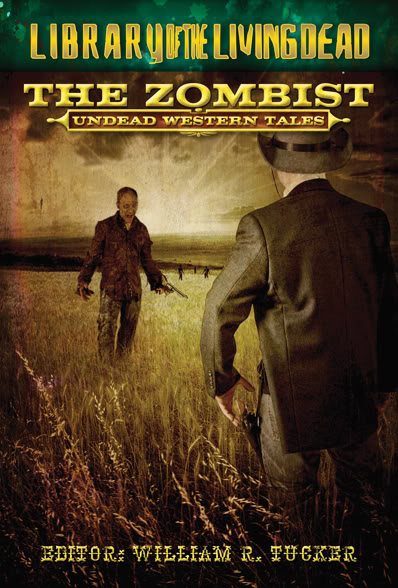
Cover for Letters From the Dead revealed!

The first Anthology I will be appearing in.
I am over the moon excited about this, the first anthology from Library of the Living Dead that I will be appearing in. I don’t have a specific release date as of yet but I am very excited about this. It should be ready to go very soon!
Letters From The Dead is on Amazon: http://www.amazon.com/Letters-Dead-Mark-M-Johnson/dp/1451583079/ref=sr_1_6?ie=UTF8&s=books&qid=1274811102&sr=1-6
My first interview!!!
Tim Long, Horror and Fantasy Writer Extraordinaire, was kind enough to include me in a interview he did with several different up and coming writers who are getting published in various Library of the Living Dead Press works.
It was a blast to do. There is plenty of other good stuff in his podcast for the horror fan, so check it out!
Collaboration of the Dead
It appears that I will be participating in a collaborative effort with several other writers who have been published by the Library of the Living Dead and in other publications. I believe the term for what is planned is a mosaic novel. To the best of my understanding, this is how it works:
A coordinating editor or contributor brings together a group of different writers and sets the stage for a story they will develop together. Each writer is assigned a couple of different chapters they will write, either in a random order or perhaps in an organized setup. The order is determined and then the first chapter is written, edited, and then passed along to the next writer. That writer produces their chapter and then hands it back to the coordinator, who edits it, puts the two chapters together, and hands both of them to the next writer, who reads, reviews, and crafts a third chapter in the story. This continues on, and perhaps circles back through all the authors after they have all had a hand in crafting one chapter each so that they can complete their other chapter. Finally, when all the chapters are done, they are compiled and then hopefully published.
The project I will be working on was a spontaneous idea from one of the writers at the Library who has not planned further ahead than getting us all together. Whether it will end up being published by the Library or by another publisher remains to be seen. So as it stands, it will be a very exciting and unique experiment for me as well as the other writers involved.
I will admit, I am nervous about this, although the collaboration here is more generalized than one might experience if they were writing a novel in tandem with another writer and the communication is far more intense as you both strive to complete the story and make any differences in writing styles work. I am not sure with this mosaic novel whether the expectation is that we will all be writing in the same style and keeping the story consistent, or if the expectation is that everyone will be allowed to go crazy and really twist the story around as we see fit. It will definitely be a new and exciting experience for me, one which will definitely help me grow as a writer.

Coming up with Story Ideas
One of the biggest challenges that wears me down as I have gotten more serious about writing is coming up with new, fresh ideas for stories on a continuous basis. Some will say that stories that have creatures like zombies in them, which have been used in a wide array of stories over the years, is probably not going to get you an award for creativity. It’s certainly true that I have read my fair share of rip-off zombie tales that follow the patented process made famous by Romero and others, with a group of people hiding out in a enclosed area desperately trying to figure out how they will survive because the undead are bashing at the doors, or gates, or whatever, and things are getting tense inside, and perhaps there are some other living humans outside that are also causing trouble, etc. But I have also read quite a few zombie stories that bring new ideas to the table by making the zombies intelligent, fast, demonic, alien, etc. I have also read the same type of stuff in other genres countless times with the rehash factor playing a major role. Heck, I have read an author who has regurgitated the same idea they had years before and just put some new decorative touches on it before selling it again.
What I have gathered from all of this is that even if you use a tried and true set of story guidelines and keep going back to the same well, it doesn’t mean you are creating something dull, drab, and uninspired. Similarly, if you throw some real curve balls with your ideas to make your story stand out as unique and different, you may still have the same stale and flabby plot if that is all you are relying on to make your tale something someone will want to read.
In other words, the setting is only one piece of the puzzle. I have read in excess of 300 different zombie books over the past few years, mixed in with a wide assortment of stories from other genres. And no, I am not just some incredibly obsessed fan boy who cannot stop pouring over the minutia of survival that apocalyptic and zombie stories usually give you. Sure, I’ve given my fair share of thought to what it would take to survive if things go terribly wrong in the world. I’ve written my posts on various message boards talking about that topic and others, both with the very serious folks out there that thing the world is going to end tomorrow and those who just love to kick around ideas and have some fun with it. BUT, and this is the big BUT, that does not mean I like reading the same old story with just minor changes just because they have zombies in them. Because what I really enjoy in good zombie story is a writer who can come up with new characters, new challenges, and essentially someone who will paint a fresh coat of paint over a basic story that has been around since Romero created Night of the Living Dead. In other words, if you are stuck in a farmhouse with a bunch of other people, I am not going to groan this setting has already been used, but I expect some new perspective , new and compelling characters, and something that will perhaps shed NEW light on the human condition. This is not to say that catapulting these characters into a new fresh environment with an entirely new breed of the undead might not be a bad idea, but what it boils down to for me, at least with what I would define as a ‘good zombie story’ is that you’ve made a serious effort at presenting the reader with characters that are multi-dimensional, intriguing, human, and perhaps allow us to love or hate them based on who they are and what they are willing to do. No, scratch that. That doesn’t just make for a good zombie story, it makes for a good story in general.
I use the zombie genre as an example because it is one that I have been immersed in for some time as I have written my book and the short stories that have followed up with more recently. My novel, in some ways, has a very traditional setting for a tale of the apocalypse. The undead nemesis is, for the most part, is very traditional. But I didn’t focus all my energy on the undead. Most of my effort went to developing characters that felt real and natural, doing what they can under terrible circumstances. Whether or not I succeeded in creating a compelling story with them is something each reader will have to decide for themselves, but finding a publisher willing to put out my book and having others who have read it indicating that it is a compelling has definitely given me the confidence to know that I can perhaps write something enjoyable and entertaining. But the first person I had to please was myself. Just like every other author I have know, I am by far my harshest critic. So with my novel, I didn’t slam my head against the desk desperately trying to write a story that didn’t have elements no one else has ever used before. Instead, I devoted myself to making my characters people that would keep someone glued to the page to see what happens next to them. Hopefully I pulled that off.
Short stories are something I am spending time with right now. The ideas for these are ones you can put together and develop without mapping out massive story arcs, which is a nice change of pace for me from writing the novel, although I will be getting back to writing my book within the next month or two. Writing short stories, after diving so deep into one story with a very specific characters, is a refreshing twist for me. It allows me to work with character that aren’t perhaps as complex, at least on the written page, but still definitely have intriguing stories to tell.
I do struggle more with coming up with creative stuff for short stories than I did with my book. I think of these smaller stories like guerrilla warfare. You sneak in, do the job, and get out before anyone realizes what you’ve done. Writing a novel is like going to war. You are the general and you are looking at thousands of different troop movements and trying to figure out what the enemy will do before they do it so you can adjust your techniques to outwit them. It is waged over months and years and generally speaking can be quite costly for all involved. A war takes lots of planning before you ever attack, and there are lots and lots of battles, and the map you are working with changes daily, because things change as you move forward-you discover you don’t like the direction a particular plot point is taking, some wonderful idea has filtered through that will require you to revamp over 100 pages of your tale, etc. The whole objective of guerrilla warfare is to get in and get out before the enemy can point its artillery at you and smash you flat. So it requires you to be light on your feet and come up with a story idea that can be effectively relayed in just a few thousand words, rather than 80,000.
I am not sure how good I am at writing short stories just yet. I have four accepted currently, and three more I have to wait until the editor gets past their designated deadline to even look at, but none of that means that I know for sure that I have what it takes to come up with something new and different every few days or weeks, which is what writing short stories is all about. Because you see, unlike with a novel, I think there is more onus on the short story writer to have something unique and different each time they set pen to paper. In 5,000 words or so, you need to set the stage, build the drama, let the story unfold, and bring it to a conclusion. Trust me, that is not such an easy task.
So far, I have been able to come up with something different with the short stories I have written. There are a few others I haven’t tried to get published because they really haven’t fit in the anthologies I have been working with, but if an idea strikes, the first thing I do is write it down and then stow it away. If it really is something I am obsessed with and have fully shaped inside my brain, I will start writing it right away. But usually the ideas I have are half formed and need time to gestate.
An example would be a story idea I came up with about a sixteen year old girl who has been bouncing around the foster care system her entire life. She is a chronic troublemaker and no one can handle her for long. Along come a very stern, very religious couple, who agree to take her and intend on scaring her straight. The main character takes that as a challenge and tries to torment these people, but they are un-tormentable, or so it seems. They lock her in her bedroom at night and she hears them down in the basement, praying. She wants to mess with them and wants to also find out more about their very secretive beliefs, so she breaks out of her room one night and suddenly, she discovers… Well, that was as far as I got. The idea was fairly basic, and would need a lot of molding and shaping, with some major embellishments. But what did I do with this idea? I later found a anthology that was looking for stories on phobias. These would be horror stories about the innocuous fears we have. So I started morphing my idea and wrote a story where there is a little girl who has a phobia of God and religion and she gets taken in by a very religious but very kind couple. I submitted the story and am waiting until the deadline passes in another month or so to see if its been accepted.
Sometimes you just never know where a story will lead you.
Other story ideas pop into my head fully formed. Writing the outline is simple and easy to do. A story I hope to start writing today is one like that. Another anthology is looking for stories of doom. In other words, major catastrophic events that wipe out whole civilizations. That was their only guidelines, but the idea that popped into my head was fully conceived and very specific. I wrote the full outline for it in around ten minutes and thus far, I love the idea as it is. That’s not to say it won’t change as I start writing, but for now, its a go and I just have to make sure I stick to the story guidelines about length and content before I turn it in.
I know of plenty of authors who out there who are superbly more talented than me who can see some submission guidelines for a short story or even a novella and their brain immediately starts creating something that works perfectly for what the editor is looking for. I envy those folks, but that is not me. I have to be hit by inspiration or I just don’t have the enthusiasm to carry a story through. The eureka moment is a big deal to me, and while sometimes it comes when I concentrate, most of the time it comes when I am not even thinking about writing, stories, or anything creative. Its not always a lightning bolt and thunder clap, sometimes its just a light drizzle that slowly saturates me and allows me to slowly poke and prod the idea until it fully develops into something tangible and hopefully, publishable.
I am afraid that one day, I will be sitting down, having just finished a story, and my brain will go blank, with nothing left inside as far as creativity is concerned. So far, it hasn’t happened, but the fact remains that I can’t always come up with something new that fits with something someone actually wants. An example is a new anthology looking for submissions that are supposed to be humorous science fiction tales. I would love to be a part of that and create something that is a riot, but unfortunately I haven’t come up with a single good idea as of yet. The good news is there is no deadline for this story just yet, so I have time, but I am still wracking my brain trying to come up with something for it. In the meantime, I have other ideas that just pop in my head that will make interesting stories, but none that are remotely close to something sci-fi-ish and humorous. But such is life.
I wish I had written this topic with some sort of advice in mind for someone reading this, but I really don’t have anything for you. Sorry if that seems selfish, but the muse visits different people in different ways. It seems that everyone has a different way of coming up with story ideas. Different inspirations, different personalities, different ways of thinking. I guess the best thing is to keep an open mind and listen to the world around you. Because you never know when or where inspiration will hit.
Introducing: Comes The Dark
This section of my blog is going to be dedicated specifically to my first novel, Comes The Dark, which is being released by Library of the Living Dead Press later in 2010.
At its most basic, CTD is the story of a man who has lost everything in a world that has already rapidly deteriorated to the point where it is barely recognizable anymore. A virus is at the root of humanity’s destruction and those infected are turned into undead monsters that seek only to annihilate the few survivors left remaining. My desire in creating this story was to try to better understand, from my own perspective, how much one person can take and how far they are willing to go to survive with barely a shred of hope for themselves and the rest of humanity. What keeps them going? Is is all fear, or perhaps is it anger at what has happened to them? Is there any willingness to hope for something better despite there being no evidence that there is a reason to hope?
Certainly, this is a story about zombies, with all the harsh brutality you would expect from such a horror story, but my focus is on the living that inhabit this dead world. How they interact with one another, how they cope, and how they fight to survive against nearly insurmountable odds.
Jeff Blaine, the main character, is a typical guy who leads a typical life. Before the story begins, he has a decent job, a house in the suburbs, a wife, two kids, and nothing much else that makes him all that interesting to those around him. While he considers himself a good guy, a nice guy, he has never really been put into a position that has forced him to be anything different than that. Like most of us, he would like to believe he can handle pressure, but really, he doesn’t have much of an idea what type of person he might become if things really get bad. He’s probably slightly more of a sinner than a saint, but again, he’s never had a major dilemma that would might test his moral fiber, so its easy for him to believe he would generally choose to do the right thing.
You would probably like Jeff if you met him. He knows how to give a firm handshake and look you in the eye when he talks to you. He learned early on how to give a good impression but to avoid being too flashy so that he stands out from the crowd. He participated in a few activities in college to pad his resume but these days he’s not all that interested in being much of a joiner. He is the guy who typically can find an excuse not to get involved with the Home Owner’s Association or to join the Rotary Club when a buddy or a neighbor approaches him. He’s willing to buy your daughter’s girl scout cookies but he hates the idea of volunteering his time at his church’s charity events. He might fudge the amount he donates on his taxes but avoids anything more risky than that like the plague.
In other words, Jeff is pretty much your average guy…before the world falls apart.
And thus, the stage is set for the story. You really don’t need to know much else in advance of reading the book, except perhaps for the description I created that will hopefully appear on the back cover of the book (stand by, because it still needs to go through the editing process!). Stay tuned for a few select excerpts from the book in later postings, but for now, I leave you with this:
The end came with a whimper, not a bang. The mysterious virus came out of nowhere and engulfed the world in a matter of days. Everyone who was infected seemed to die…and then rise again. Governments collapsed, armies disappeared, and entire civilizations turned to dust as the human race tore itself to pieces.
Jeff Blaine had a good life: a beautiful wife, adorable children, and a nice house in the suburbs. He liked his job, loved his family, and spent his lazy suburban Sundays out on the deck, barbequing with the neighbors. Things were perfect until everything fell apart. And no matter how hard Jeff tried, he could not spare his family from the horrors scratching at the door.
Now, with his family gone, his life in ruins, the only thing left is raw anger and pain. As the world continues to sink into darkness, Jeff does as well. So he ventures out into the desolation with no better plan than to destroy as many of the monsters that stole his life away before they destroy him as well.
But soon Jeff will discover other survivors unwilling to give up. They will force him to decide whether or not to succumb to the venom that gnaws at his soul. Should he continue to fight to survive, or succumb to the things that come with the dark?
My experiences with the writing, editing, and publishing process.
Its almost surreal, this experience I have been going through lately. Well, when I say lately, I mean over the past three and a half years. July 2006-That is when I got “serious” about this writing stuff. I, like many people I know, had always sworn they would become a writer some day. We all have ideas, we all have plans to sit down and write chapter after chapter and create the great American novel. Or at least, the novel that someone might want to read, even if it is just our wives or husbands and maybe the rest of our family members. But honestly, how many of us end up doing that?
I have a friend who encouraged me every step of the way. He was impressed when I told him that I had written a hundred pages, he was impressed when I finished my first draft. He had started his own book, and trashed the efforts, countless times. He could never get past chapter one.
Well, for me, the journey was about kicking myself in the ass and not playing around any more. The disconnect was never after I had sat down and started writing, it had been moving from the idea stage to reality. Once I actually started writing, I never looked back…
Now, please understand, I think it is fair to say that everyone writes differently. You can’t say that there is a step by step process that everyone should take to become a successful writer. Certainly, I can’t recommend On Writing by Stephen King enough. That guy is a machine, and he is a regimented, highly organized writer who keeps to a schedule and perhaps even follows all the rules he has in place for how things are supposed to go. Me? I doubt I will ever be like that.
Some folks I know sit down with an idea and just start writing. It flows from that point and grows from there. They have a general idea in their head where they want to end up but don’t limit themselves by organizing their thoughts too much beforehand. Me? I over think EVERYTHING during the writing process. Let me put it this way: I started writing my novel back in July of 2006 and I believe my first draft was not completed until January of 2008, a year and a half later. Now let me say this: that was not me simply writing and writing. That process involved outlining, revamping outlines, trashing big chunks of what I had originally written, and laboring over individual sentences at 3 a.m. as I tried to make it sound right. By the time my first draft was completed, it was well over 360k words.
Let me repeat that for those of you in the cheap seats: 360k words. Stephen King’s The Stand was originally released with 150,000 words cut from the manuscript. It was still well over 800 pages (honestly, I can’t remember how many pages there were) but my book was about the size of the originally released version of the stand. Now even with my meandering mind could I ever hope to top Mr. King, whose unabridged version sits at approximately 520k words.
So, move forward from my triumphant evening sitting at the keyboard, when I typed out that last sentence and officially announced to friends and family that I had finished my book. It felt like a relief, like I could scratch off something on the bucket list, etc. I was 39 years old at the time and I had written my first novel before hitting that big middle aged landmark. I was over the moon.
Then I started to realize that even with all the editing I had done, all the effort to put together something presentable, that my story was monstrous. I approached a publisher. Someone I had been having a dialogue with previously, because I had been reviewing books they had come out with and they had been so kind as to send me review copies of other books to also review on Amazon. The publisher was more than willing to look at my book, but…and this was a big BUT, could I turn it into a trilogy? The reason for this was because at 360K words, it was far, far, far too large to ever be considered for publication with them. He liked a maximum of 120K words per book, and that was even pushing it.
Sooooo, that leads us to the second part of this process-my efforts to turn my book into a trilogy. Thankfully, that was not as hard to do as I had originally though, because as I started looking, I saw three natural splits in the novel-cliffhanger endings that set up the following segment of my tale nicely. So that was done, along with some more compulsive editing.
Alas, this is where I began to actually learn a few more things about writing that became invaluable to me. The first came a month after I submitted my manuscript to this particular publisher and the gentleman came back and said that he could not publish my book. He was kind enough to provide me with feedback and the key thing I took away from that was this: I was doing a hell of a lot of telling and not nearly enough showing. In other words, I was dumping a lot of information on people and not allowing them to discover the story for themselves.
I thanked that publisher and admitted to myself that he was absolutely correct in his assessment. I also realized that my book was massively over bloated and I needed to mercilessly start to slice and dice it down to what it should have been in the first place.
So my editing journey continued. The publisher had actually suggested I leave this story on the shelf and work on other stuff for a time and after getting published with other novels or short stories, then return to my story later. I had given that some thought but in the end, I couldn’t help but return to the story that had been in my dreams and nightmares now for two and half years at that point. It was the beginning of 2009 by then, and my novel had just gotten rejected by a publisher and as a side note, my job had just been eliminated.
So, I was unemployed and focused on finding a new job. I did leave my book on the shelf…for about a month or two. Then I went at it with red penned zeal. I should probably say at this point that other people were reading what I had written. They had been doing so for quite some time. I definitely took a lot from their thoughts. Mind you, I didn’t change everything based on their suggestions, but having those other folks to bounce things off of was invaluable.
I was bound and determined to get my book published. Let me put that a different way. I did not want to self-publish. Period. A writer by the name of Rhiannon Frater has written a trilogy of zombie apocalyptic fiction entitled As The World Dies. She went the self-publishing route. Her success is well known in the world of zombie fiction. I can’t say that I know Rhiannon personally, but I do know her through the wonderful world of the internet-Facebook and message boards, etc. Her success has been definitely the exception to the rule. Rhiannon has a business savvy and loads of smarts that allowed her to self-publish and create something that was terrific and create something that people have bought. Word of mouth has been a big part of that. That is my plug for her work: go buy her trilogy. Its fantastic.
But Rhiannon’s success is the exception. There are good self-published novels, sometimes by jaded authors who got sick of trying to go the normal route to publishing. They write terrific stories that will really blow you away. But in addition to those novels, you are going to get a LOT more novels that probably were taken out of the oven way too early. That is my polite way of saying that a professional editor would have gone a long way for those folks who so desperately wanted to get published and were willing to do whatever it took to achieve that dream as fast as possible. On top of that, you have to consider how much marketing responsibility you have taken on by becoming your own business entity. Rhiannon was able to do it, but I daresay she is a unique person. Did I write a book so I could become famous and read by thousands or millions? No, but if I am going to get published, I would like to have a company standing behind me with not only an editor, but the ability to effectively market what I have written. They can promote my book in the back of other books they produce, they can take me to trade shows, put excerpts from my book on pod casts, etc. Being in a stable with other authors is also invaluable. I have interacted with a much larger group of people because of my relationship with the Library of the Living Dead. Not only is Dr. Pus, the benevolent publisher, someone who I have gained valuable insights from, but I have also had the privilege of bouncing ideas off of published authors like Tim Long and Steve North. That guys like that (amongst many other terrific writers) are asking for my opinion on what they are currently writing is mind blowing.
Whew! That was quite a tangent, wasn’t it? So anyway, back to my saga. I pulled down my manuscript and started slicing it and editing it about another million times. The end result? About 162K words. At the same time, I introduced myself to the Library of the Living Dead and Dr. Pus, who was so kind as to create a section of his message boards where I could post chapters of my book for others to read and critique. What a difference that made! It introduced me to a lot of people. Folks like those I have mentioned above, including Rhiannon Frater, who has not only been self published but also published at the Library as well. Tons of other writers of both novels and short stories, as well as fans of the genre, were there, supporting me every step of the way.
So after I felt pretty strong about my novel, I submitted it to the Library. But again, at 162K words, it was a bit large, but still could be turned into a trilogy that would make sense and worked quite well. So I spoke to Doc about that and less than a couple of weeks ago, he agreed to publish it as a trilogy.
Once again, I was over the moon and thrilled. But the journey, in many ways, has just begun. Doc is assigning me an editor, who I will become very familiar with over the next few months (and beyond), I am sure. We have chatted about artwork for the cover of the first book, the description on the back, and any sort of promoting that I can do, including creating a website (thus this blog, which is the tip of the iceberg for me). I will be at Horror Realm in Pittsburgh in September, which will be occurring shortly after my book is released in September.
I will likely be talking in detail about my experiences with the publishing process in later blog installments. Its been an interesting ride so far.


 Patrick D'Orazio's Blog